


Zhou Tianyong was a senior figure in the party’s theoretical establishment during the Hu-Wen years, having held the position of Deputy Director at the Research Office of the Central Party School in 2005-2010. He is perhaps best known for his organising role in the 2007 report Storming the Fortress: A Research Report on Reform of China’s Political System after the 17th Party Congress, a programme for gradualist political reform that pushed for the loosening of political controls and development of civil society.
Zhou is still an active researcher and writer, but his platform nowadays is as director of the National Economic Engineering Laboratory, based at Dongbei University of Finance and Economics and incorporated within the China Society of Economic Reform, an organisation among the crop of modern establishment think tanks to emerge during the 1980s.
His subsequent writings have examined how official controls and insufficient marketisation relate to overcapacity and slower growth. In an upcoming book on the tussle between the state and market sectors in China’s “dual-track economy”, he argues that in the absence of the concerted political will for reform, power dynamics dictate that “administrative planning will inevitably make a strong comeback, and the share of inefficient state-owned enterprises will expand again”.
The following is Zhou’s rebuttal to the idea that a focus on a “Fourth Industrial Revolution” might revive China’s growth prospects. I quoted it briefly in our report on how Chinese economists are assessing the impacts of AI and automation on the economy, but I hope you’ll agree that it’s worth a full translation.
The first section is largely preamble, building up to the bold arguments in the second section: a cogent warning against China betting on high tech to revive economic growth, followed by a call instead for “easing restrictions, opening up and invigorating economic activity” to bring Chinese society’s full potential into play.
—James Farquharson
Key Points
AI and digital platforms differ fundamentally from earlier industrial revolutions: machinery and electricity enabled mass production, whereas information technology cuts costs by replacing labour, equipment and physical premises.
AI and platforms concentrate economic gains among technology owners. Lower spending on labour, buildings and equipment means less income for others, so higher productivity may coexist with weaker household demand.
AI will support growth only if it generates more income than it displaces. New earnings must exceed lost wages, rents and capital returns; otherwise, productivity gains could accompany economic contraction.
Redistribution cannot be assumed to solve the demand problem. Technology owners are unlikely to share gains voluntarily, while government budgets already face heavy demands from debt repayments, pensions and healthcare.
Employment gains and redistribution may arrive too late. AI’s job creation remains uncertain, retraining everyone quickly is unrealistic, and reforms to income distribution could take decades while economic pressures intensify.
The key reforms to make are in easing government restrictions to bring idle labour, capital and land into productive use, and thereby support businesses, jobs and higher household incomes.
Land reform should give farmers and migrants assets they can trade and use to support businesses. Freer property transactions and water diversion projects could unlock wealth and expand productive capacity.
The Scholar
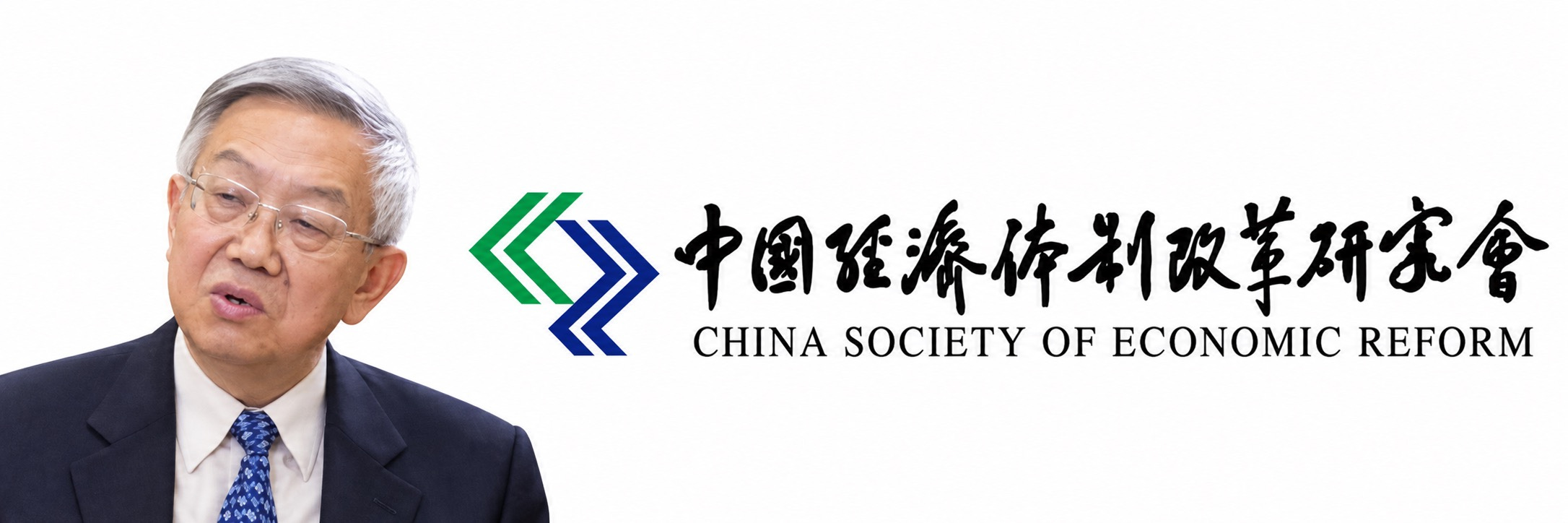
Name: Zhou Tianyong (周天勇)
Year of Birth: 1958
Position: Director, National Economic Engineering Laboratory, China Society of Economic Reform; Senior Research Fellow, Institute of Global Governance and Development, Renmin University of China; member, China New Supply-side Economics 50 Forum
Formerly: Deputy Director, Institute for International Strategic Studies, Central Party School; Deputy Director, Research Office, Central Party School
Research Focus: Economic Growth and Development, Institutional and Fiscal Reform, Urbanisation, Land and Property Economics
Education: Bachelor’s degree, Dongbei University of Finance and Economics, China (1984); PhD in Economics, Dongbei University of Finance and Economics, China (1992)

A SOBER ASSESSMENT OF THE ROLE OF PLATFORMS AND AI IN SUPPORTING CHINA’S ECONOMIC GROWTH
By Zhou Tianyong (周天勇)
Published on Zhou Tianyong’s public account on 3 September 2026
Lightly edited machine translation
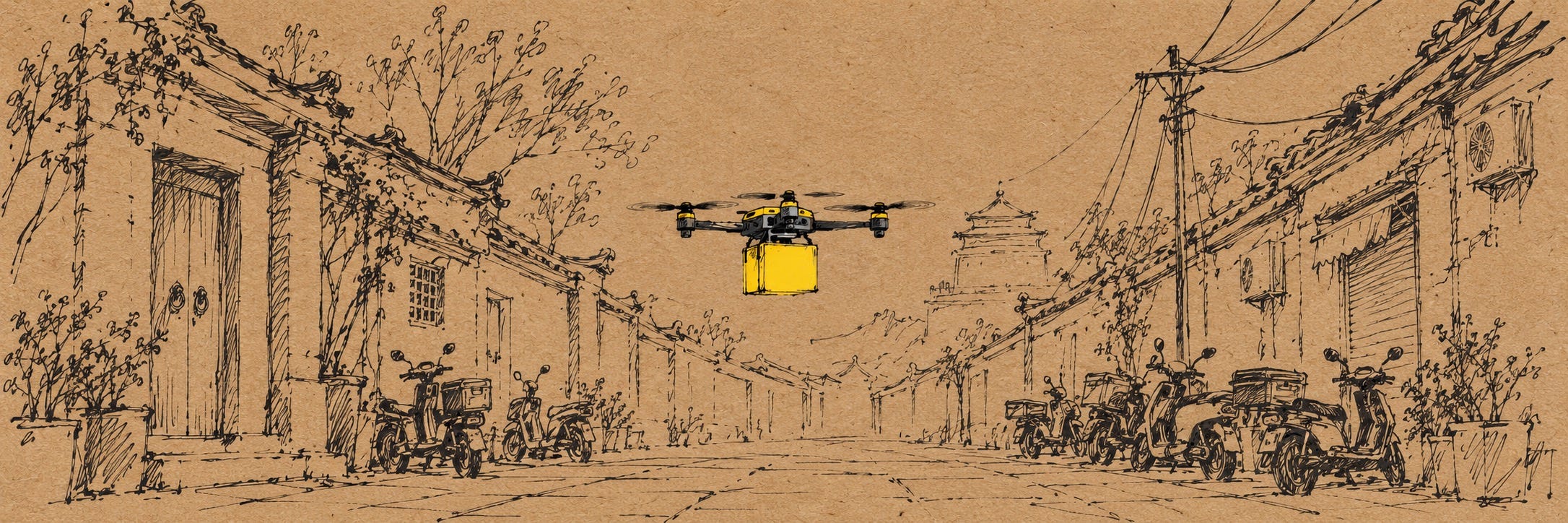
(Illustration by ChatGPT)
The twenty-first century has been a golden age for the development of the platform economy and, entering the third decade, AI technology and intelligent manufacturing have also begun to flourish.
But can these new technology industries sustain the economic growth rate? And can they increase employment opportunities, raise household incomes, expand demand for consumption and reverse the drag that insufficient aggregate demand places on economic growth?
In my view, these are questions requiring sober reflection.
I. Distinguishing between humanity’s two information technology revolutions
Across the long span of human economic and social development, the transitions from hunting animals to raising livestock and poultry, and from gathering wild fruits to cultivating crops, were the two great revolutions in the modes of agricultural production. Subsequently, the application of steam-engine technology and that of electricity and its transmission constituted the two industrial technological revolutions, in which humanity used machinery and electricity for mass production.
From the mid-to-late twentieth century onwards came electronic computers, the mobile transmission of information, wireless and wired networks, the organisation and classification of data and integrated data-processing platforms. These constituted the first technological revolution of the information-network society, extending from the mid-to-late twentieth century to the early twenty-first century. Now, the second technological revolution, centred on data, information and large algorithmic models, is unfolding in the twenty-first century, starting with the large-scale application of AI in China and the United States.
The modern industrial age has created productive capacity on an unprecedented scale. Some international experts have expressed particular astonishment at China’s manufacturing capacity, suggesting that it has reached a level sufficient to supply almost the entire world. Although this is somewhat of an exaggeration, such capacity does exist to a degree.
It should be noted that the scale and expansion of industrial productive capacity are influenced and constrained by two factors. The first factor is the material requirements arising from population size and population growth: this is the fundamental, determining factor. The second factor, in a market economy, is effective demand as determined by economic development and income levels, which constrains the maximum output that productive capacity can deliver. For example, the total and per capita quantities of material wealth that productive capacity can supply differ between the most developed and least developed regions. Within China, they differ between different towns and cities and between urban and rural areas.
I believe that the nature and functions of technological revolutions need to be rigorously distinguished and defined. Computers, wireless mobile communications and information-network systems, which emerged from the mid-twentieth century, together with the online platforms and AI that emerged in the twenty-first century, constitute two information technology revolutions based on data networks and intelligent algorithms. These are entirely separate from humanity’s two earlier industrial technological revolutions based on machinery and electricity.
The nature of the industrial technological revolutions was to provide specialised motive power. Their function was primarily to replace the hand tools and human physical labour of the workshop era with machinery and electricity. The result was that machinery, combined with factory production and modern transport, enabled the specialised, standardised and large-scale production of material wealth, while providing convenient, rapid and efficient systems for moving people and wealth.
From the computers of the mid-twentieth century to the AI of the mid-2020s, the nature of this information technology revolution is to provide specialised intelligence. Its function is primarily to replace carbon-based human brainpower with silicon-based AI in the use, operation and control of machinery and electrical power. The result is that large models are taking over some of the technological research and development previously undertaken by humans, shortening the cycle of technological progress and accelerating technological replacement. Combined with machinery and energy, they can increase the efficiency of industrial production hundreds or thousands of times over. In terms of productive capacity, they make it possible to generate material wealth on an even greater scale.
From an economic perspective, however, there is a major difference [with previous productive revolutions]. The industrial technological revolutions based on machinery and electricity were directed towards making the production of material wealth possible on a mass scale. The information technology revolutions based on data networks and intelligent algorithms have an entirely different direction: their purpose is to reduce the costs of labour, capital and land inputs in large-scale industrial production, enabling technology and platform owners to capture a greater and more concentrated share of the profits generated by new technologies.
In the industrial age, the factors of production consisted of technology, labour, capital and land. Their combined inputs created GDP, while machinery and electricity enabled its exponential growth and expansion. Of course, under traditional capitalism, in the absence of redistributive measures, those who owned more machinery and energy resources, who could organise, manage and deploy the factors of production, and who could use machinery, electricity and other energy sources in production, possessed more wealth.
In the information age, however, platforms and AI change the composition of factor inputs: artificial intelligence replaces labour; highly efficient machinery incorporating AI replaces traditional capital; and platforms replace land and premises, such as shopping centres, law firms’ offices, schools, offices, meeting rooms, dining halls and transit warehouses. In fact, GDP in the industrial age was formed from value added in the form of patent royalties, wages, returns on capital, and rents on land and buildings. Those who control the most essential AI technologies, who have the greatest experience and proficiency in managing and using AI, and who own and operate platforms will therefore receive the largest shares of wealth.
Despite my concerns discussed above about the implications for human development of information networks, commercial digital platforms and advances in AI technology, I am nevertheless a firm supporter of the information technology revolution. We should actively embrace the arrival of the AI age rather than seek to restrain it.
II. Wargaming the use of information technology to revive the national economy
The battlefield situation that confronts us is as follows. Aggregate demand is insufficient, with the key problem being insufficient aggregate consumption demand. This is because farmers’ incomes are too low, the incomes of the urban migrant population are also modest and total household income accounts for too small a share of GDP. Consequently, the CPI remains subdued, manufactured goods are difficult to sell and productive capacity is excessive. Insufficient household consumption demand, together with weak sales that cause businesses to stop investing, in turn creates a shortage of effective liquidity in the national economy.
Meanwhile, the government, households and businesses are heavily indebted. As economic growth slows, their capacity to service debt from income declines, and principal and interest payments exceed the income available for debt servicing, intensifying the contraction in effective liquidity. The result of this cycle is ever greater downward pressure on economic growth.
We need to calculate carefully whether the additional value added generated by platforms, big data, AI and intelligent manufacturing can truly offset the wages, returns to capital, depreciation, and rents on land and buildings that information networks, transaction platforms, AI work and intelligent manufacturing eliminate. If the value eliminated through these savings exceeds the value they create, new technology causes the economy to contract rather than grow.
There is a grand narrative that platforms and AI will create boundless wealth, and I don’t doubt that they may. But no matter how many goods and services are created by mechanised AI, the question that remains is who will buy them? It seems unlikely that platform businesses and those engaged in AI and intelligent manufacturing will use their earnings and wealth to push down prices, or transfer their earnings via charities to groups with insufficient purchasing power. One could establish a welfare society in which the government pays to procure the goods and services created and supplied by platforms, AI and intelligent manufacturing, before transferring them to groups with limited spending power. But public finances are also under strain and debt repayment, public administration, pensions and medical insurance all require funding.
Some scholars hope that AI will create more employment opportunities in the future. This is a hypothesis. Even if it proves correct, how long will it take? The urgent task now is to improve opportunities for entrepreneurship and employment, and to raise incomes, for farmers, migrants and the students graduating each year from universities, colleges and specialised secondary schools. How are we to do this? AI is a technology that can replace the labour of the urban middle class, mobile urban workers and farmers, who together number almost one billion. Is it realistic for them all to learn AI, use it and earn income from it in the short to medium term? If not, how will AI increase their earnings from work? Without platforms, would they have fewer jobs and lower incomes than they now obtain through flexible work in delivery services and ride-hailing?
Of course, one plausible move [走棋思路] in the AI era would be to align the systems for creating wealth and distributing income, then use redistribution to support people who are less able to start businesses and have few opportunities for stable work. But how long would that take? If the necessary reforms take ten to twenty years, we may not be able to wait. The pressure on growth is already severe, and the situation could deteriorate beyond repair before those reforms are complete [滑向不可挽回的地步].
Following this chain of reasoning, the decisive judgement we need to make is: how much impetus can these technologies really provide for China’s future economic growth? Should we place our hopes for the principal driver of growth mainly upon platforms and AI, or upon reform of the economic system?
Let me state once again that AI represents progress for human society. In international competition, we cannot afford to fall behind, and we must intensify our efforts to develop it.
However, we cannot stake everything [把宝全押] on information networks, trading platforms, AI-based work and intelligent manufacturing when it comes to the future development of small, medium-sized and micro enterprises, employment, higher household incomes, strengthening the economy’s aggregate balance sheet and preventing a further slowdown in economic growth.
Only by continuing to deepen economic reform—easing restrictions, opening up and invigorating economic activity, and substantially reducing government tightening of control, its “ability to regulate” (relative to its “inability to regulate” during the first half of the reform and opening-up period) and its curbing and stifling of activity—can we bring into productive use the enormous quantities of surplus labour, capital, land and other factors left idle by institutional arrangements, and raise their productivity. [Note: His recommendations are discussed more fully in the conclusion of his soon-to-be-published book].
We must also advance reforms that turn resources into marketable assets, granting farmers and urban migrants [normal] property rights over land use. [Note: Farmers hold contractual rights to farmland and use rights to residential plots, but face restrictions on selling, transferring or mortgaging these rights, particularly for residential land.] This would give them some security in the form of assets, allow them to start small businesses using land as their asset base, and enable them to receive gains in value arising from the liberalisation of transactions in urban and rural land and housing. Meanwhile, large-scale water diversion to develop usable land, combined with market-oriented reform, could expand land’s productive capacity through factor inputs, generating further gains by turning land into a marketable asset. This is the correct way to revitalise the economy.
READ MORE
China’s AI Jobs Problem: What Economists Fear and Why the Fixes May Fall Short

Chinese economists have not reached a consensus on the long-term job creation prospects of AI. However, there is near unanimity that in the near term, AI adoption is likely to severely impact employment, lower incomes and thereby worsen the existing pattern of demand weakness and supply overcapacity. The effects of AI are therefore commonly seen as an extension of China’s long-term macroeconomic trends, rather than a revolutionary break. As Cai Fang puts it: “AI’s impact on the labour market is, in essence, of the same kind as the structural mismatch China already faces. AI is intensifying that mismatch, and its effect is growing stronger.”