


Chinese state media commentary on AI often expresses striking confidence in society’s ability to weather its effects. Calls in the pages of People’s Daily to build a system for “lifelong learning” project an emphasis on retraining for new forms of employment over protection of existing jobs. A boosterish series of articles on “stabilising employment” in the same newspaper recently spotlit data labelling for AI models, vibe-coding, AI video generation and the training of industrial robots as exciting new job opportunities.
The state is not blind to the employment risks of AI. Recent guidelines issued by the State Council on 23 October are notable for their caution, calling for local governments to “exercise prudence over the scope, intensity and pace of AI deployment in labour-intensive industries, minimising disruption to workers as far as possible”. Official documents have previously discussed AI employment risks, but such an unequivocal call from an authoritative policy-making body to slow down adoption is new. Nevertheless, the stance is still strongly pro-diffusion, while aiming to allow more time for retraining to take place. It calls on schools and universities to “expand, at an exceptional pace, urgently needed AI disciplines and programmes”.
The economists surveyed in our report, however, emphasise the economic pressures that could complicate these efforts to protect employment. Against the backdrop of state support for “AI+” diffusion, weak demand and diminishing returns on investment make the technology’s potential to cut costs and revive productivity particularly appealing to firms. Yet many economists fear that AI-driven job displacement, coupled with existing weak demand and demographic trends, could form a perfect storm of deflationary pressures, further weakening demand and strengthening incentives for businesses to replace still more workers. Even without considering extreme AGI scenarios, job losses would outpace viable new employment.
And if significant job losses do take place, how effectively would the commonly proposed measures—retraining for new AI employment, strengthening social security and expanding flexible work—act as buffers? In the absence of the fiscal basis to fund broader social security measures or subsidise broad retraining, the economists and scholars we cover appear uncertain about the tools that are available for responding to AI’s socio-economic effects.
The following is a preview of our paper with the Friedrich-Ebert-Stiftung (FES), which will soon be published in full through the FES digital library.
Key Points
State media emphasises retraining over protecting existing jobs. Many Chinese economists, however, regard the institutional preparations and fiscal basis for social security and retraining as uncertain.
Several acknowledge AI’s potential to restart productivity growth amid diminishing investment returns, but fear displacement and falling wages could create a vicious cycle of weakening demand.
Demographic concerns are prominent. Ageing could encourage automation while limiting effective demand for services, while graduate employment opportunities are shrinking even as graduate numbers continue to increase.
While some view flexible work as a safety net pending the creation of new jobs, others warn of a slide into lower-paid, less productive jobs and shrinking overall employment instead of a reduction in working hours.
Many remain unsure whether and when new AI-related jobs will emerge, while there is a funding gap for the costs of retraining. Proposed “skills accounts” would pool contributions from the state, employees and employers.
The growing number of gig economy workers, partly attributed to AI-related displacement, is increasing both the urgency and the fiscal burden of broader social security coverage.
Four Years of Sinification: 12 Months for the Price of Six
An exclusive anniversary offer for existing subscribers. Ends in one week!
Enjoy early access to selected articles and full access to our archive, while supporting our non-profit mission to provide independent, non-partisan insight into the ideas and debates shaping China.
Proposals for funding social security improvements focus on strengthening existing fiscal reliance on VAT income. A “robot tax” targeting monopoly profits from AI is also discussed, but seen cautiously as disincentivising production upgrades.
Others fear gradual social security reforms will not counterbalance near-term displacement and demand weakness. One warns such reforms could take ten to twenty years, allowing deflationary pressures to become entrenched first.
State policy promotes retraining for jobs as data annotators and AI trainers. Some social media users describe low pay, repetitive tasks, limited career progression and training certificates employers do not value.
A prominent example is AI content creation, which the state is supporting through grants and subsidies, while state media trumpets the sector’s growth as a boost to job creation.
However, AI microdramas are facing the problems of oversupply and audience backlash, while young people question on social media whether these jobs can provide stability or will themselves be displaced by further automation.
Recent support for human actors suggests partial adjustment after experimentation and follows the pattern of addressing overcapacity in other industries, rather than a reversal of commitment to AI adoption.

I. A deepening of demand weakness
Beyond the national strategic considerations, AI is being positioned to fill a specific and pressing need for many Chinese firms. As several economists have acknowledged, the investment-heavy model has begun to run out of road as weak demand and diminishing returns from further capital investment have squeezed firms’ profit margins. AI, it is hoped, could help break through these bottlenecks and restart productivity growth.
Chinese economists have not reached a consensus on the long-term job creation prospects of AI. However, there is near unanimity that in the near term, AI adoption is likely to severely impact employment, lower incomes and thereby worsen the existing pattern of demand weakness and supply overcapacity. The effects of AI are therefore commonly seen as an extension of China’s long-term macroeconomic trends, rather than a revolutionary break. As Cai Fang puts it: “AI’s impact on the labour market is, in essence, of the same kind as the structural mismatch China already faces. AI is intensifying that mismatch, and its effect is growing stronger.”
Peking University economist Huang Yiping has warned that falling wages could create a vicious cycle of weakening demand and further replacement of workers with AI, while former Central Party School researcher Zhou Tianyong suggests that if AI depresses aggregate demand, it could harm economic growth: “If more value added is removed than created, the economy does not grow: the new technology causes it to contract […] No matter how many goods and services are created by mechanised AI, the question that remains is who will buy them?”
The prospect of a collapse in the value of goods and labour has even led Zhu Jiaming, an economist associated with the 1980s economic reforms, to speculate about the eventual disappearance of money in a future AI-coordinated planned economy.
Demographic factors interacting with AI adoption are also cause for concern. In the assessment of Luo Zhiheng, chief economist at Yuekai Securities, labour shortages associated with ageing may encourage automation on the supply side, while simultaneously limiting effective demand for services. Meanwhile, the graduate population is still rising and youth unemployment is already elevated, making the risks of insufficient graduate employment opportunities particularly severe in the near term.
II. State-sector job security and the expanding gig economy
As a widely–shared satire from the investment analyst Bob Chen has suggested, the size of China’s state sector may act as an effective buffer to AI job displacement pressures. The size of the civil service and SOE workforce does give the Chinese state a tool unavailable to other governments on the same scale, and SOEs are being instructed and supported to keep their recruitment numbers stable.
However, reliance on what Chen terms “pseudo white–collar” jobs to stabilise employment has its limits. The other pillar of employment—and in terms of total workers, the much larger one—is flexible work, which comprises both platform workers and freelancers. Flexible work has been depicted as an “umbrella of reassurance” (安心伞) in state media, with the expansion of these jobs an explicit part of the present “employment-first strategy”. An NDRC-published policy commentary last year put a positive spin on the rise of such working arrangements, observing that “AI has driven the rapid growth of new forms of employment, including platform work, flexible employment, remote collaboration and digital labour”.
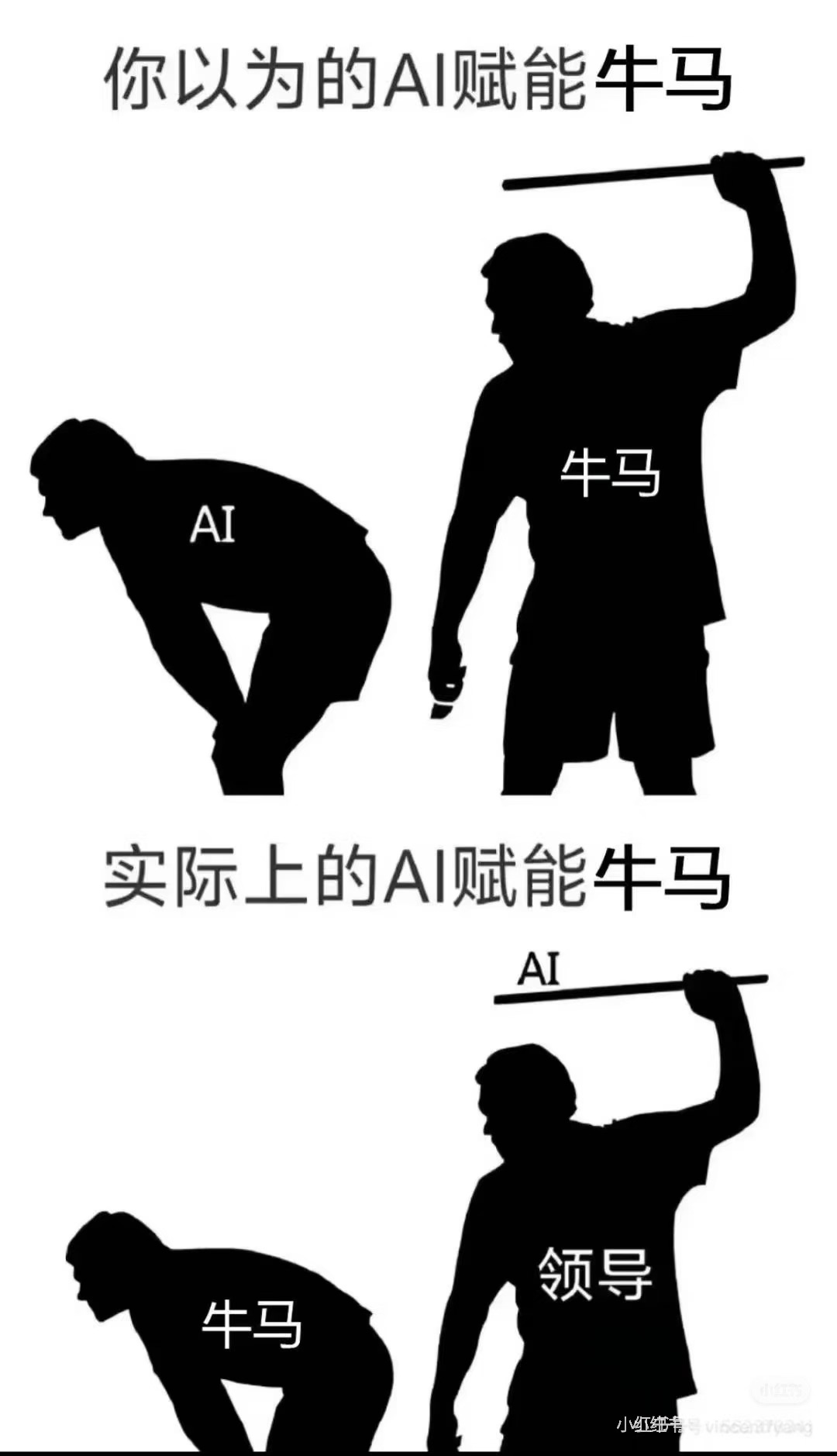
Other economists view the expansion of flexible employment as part of the problem, rather than the solution. Luo Zhiheng warns about “pressure on workers to move into lower-paid, less productive jobs”. The rise in flexible employment has already been marked in recent years, with 320 million people projected to be in such working arrangements this year. While seeing the rise in flexible work as a long-term trend which AI will intensify, CASS economist Feng Ming observes that market dynamics may limit its potential to absorb labour, producing “fewer people employed, with average working hours unchanged or even extended” in the absence of state intervention for compulsory time off.
One possible paradigm for long-term adjustment, suggested by Peking University labour economist Zhang Dandan’s framework, is reliance on flexible work in the short term as initial AI adoption displaces labour, pending the development of opportunities for retraining in new roles. However, many are unsure about whether and when those new job opportunities will emerge, while financing large-scale retraining would also incur costs for the state. Zhang suggests establishing a “skills account” on the model of pension contributions, in which the state, employees and employers pay into a fund for retraining in the event of redundancies.
III. An impetus to social security expansion?
Unlike employees whose employers make social insurance contributions, flexible workers in most cases have to finance their own pension contributions, and squeezed earnings have led many to stop paying into their social insurance pot. While the state mulls strengthening coverage for them, their expanding numbers will increase both the urgency and the fiscal burden of such a measure.
Given an expectation that the employment impacts of AI will reduce the revenue-raising potential of income taxes, the tax increases that economists propose to fund social security are usually focused on industry over personal incomes. NDC co-founder Zhang Fan suggests reducing reliance on payroll taxes, while “VAT could gradually become the main source of funding for social security expenditure”. This relies on AI-driven productivity gains generating sufficient additional taxable value, even as automation risks exacerbating the deflationary pressures that have already weighed on tax receipts.
It also goes counter to a longstanding reformist argument that the state should raise its reliance on income taxes and reduce its reliance on VAT, while shifting away from the investment-led growth model. Several economists envisage a broader shift towards a taxation structure that incentivises high-employment sectors and redistributes monopoly profits from the AI economy’s winners, with Feng Ming proposing that “existing taxes, such as corporate income tax and value-added tax, could be adapted to improve their applicability to data factors and AI-related economic activity”.
Meanwhile, labour-intensive industries could eventually be made exempt from taxation as AI’s share of economic activity grows, “an approach similar to the abolition of agricultural tax”. Yet as Zhang Fan and others acknowledge, the hasty introduction of a “robot tax” would also disincentivise production upgrades and conflict with the overriding emphasis on AI diffusion.
These fiscal constraints and conflicting priorities suggest that the likeliest strategy is only gradual and piecemeal additions to social security support, pending a tax windfall from future AI productivity gains. Yet a few economists openly express the concern that this will not be enough to counterbalance crisis-level jobs displacement and demand weakness in the near term. As Zhou remarks, the necessary reforms might take ten to twenty years, but “the pressure on growth is already severe, and the situation could deteriorate beyond repair before those reforms are complete”. This could make finding the money for social security improvements even more tricky in the future.
IV. But which new forms of employment?
From the perspective of balancing AI diffusion with employment risks, the ideal scenario would be to match as many displaced workers to new AI-related jobs as soon as possible. The May 2026 employment action plan, issued by the State Council, seeks to reconcile these two goals by pushing for retraining within firms and expanding support for new jobs, such as data annotators and AI trainers.
These measures have been reiterated in the State Council’s recent October 23 guidelines, instructing local authorities to “encourage young people, including university graduates, migrant workers, unemployed people and others to participate in employment and entrepreneurship training programmes in AI”. State media hails data labelling and training industrial robots as new forms of employment, and several local governments have already been putting programmes in place for expanding campus recruitment and subsidising retraining in AI fields.
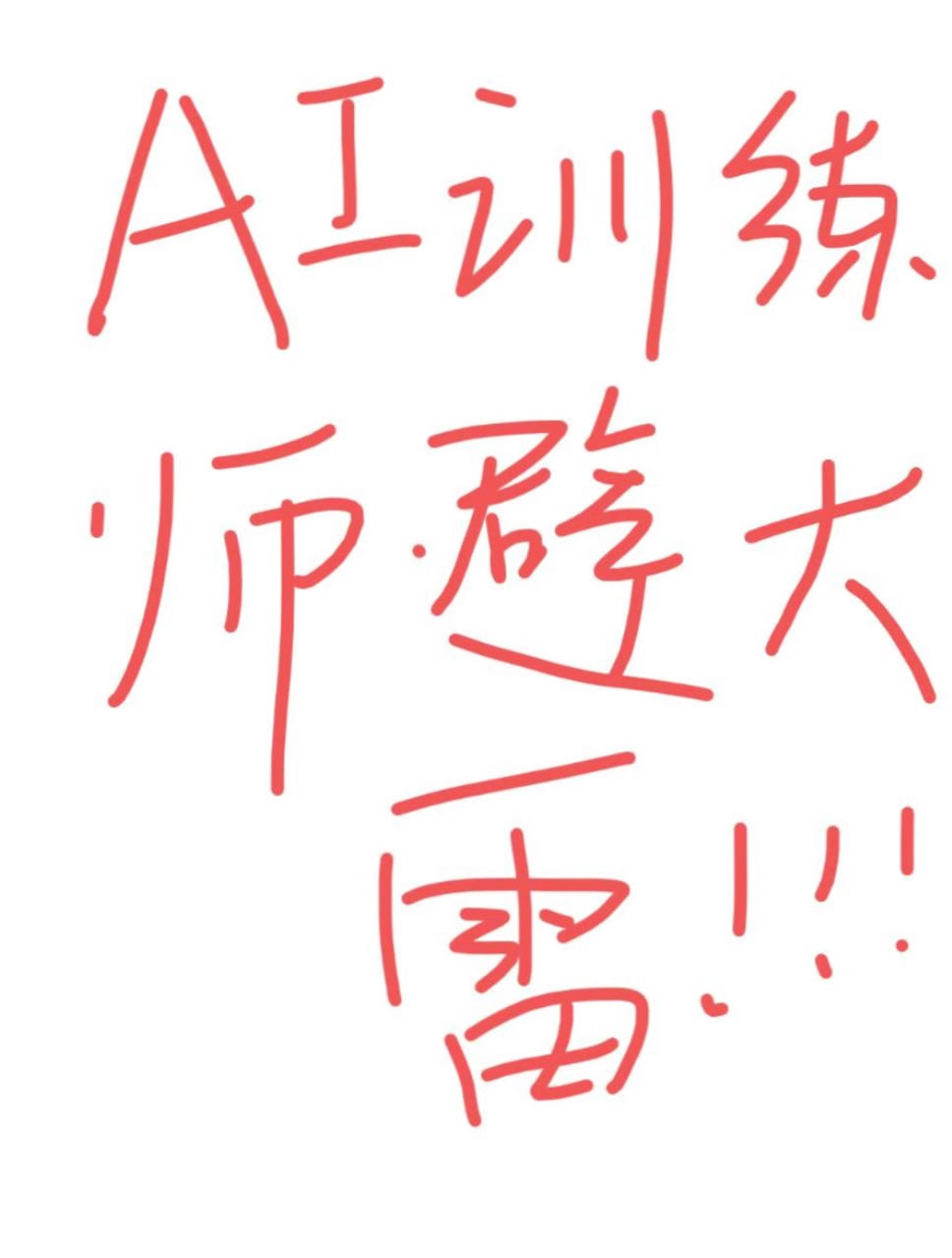
However, many of these new roles are lambasted on social media for their low pay, repetitive tasks and limited career progression. Some jobs advertised as skilled AI trainer roles apparently turn out to be data labelling grunt work. Commenters under a social media post entitled “Earnest suggestion: do not bother qualifying as an AI trainer” described brief courses followed by certificates employers did not value, with others admitting that the RMB3,000 completion subsidy was their main motivation for getting a qualification which they did not plan to use.
V. A nation of content creation: AI+ microdramas
Positioned by the government as a sector for absorbing youth employment, AI video creation is receiving state support through direct funding, compute subsidisation, cheap rent and technical aid. The local government of Beijing’s Haidian district, an area with a number of elite universities and a large student population, is offering grants of up to RMB20 million to “support cultural enterprises in using AI technology to improve creative workflows, including AI script generation and cultural merchandise, and develop original intellectual property”.
State media has trumpeted the job-creating potential of AI content creation, spotlighting the new profession of “card drawers” (抽卡师)—the employees who generate multiple short AI-generated candidate clips from which the full video is constructed. However, a central appeal of AI dramas is their lower production costs, requiring a much smaller team. Li Dongshen, the director of a successful AI-generated adaptation of the classic tale Journey to the West, claims “we used 100 people to do what would traditionally have required 2,000”. Social media is awash with tales of former microdrama actors having “no shows to film”.
Moreover, it seems that many people are acutely aware that the card drawers themselves are vulnerable to future automation. As one widely-shared social media post asks, “if there were a new rice bowl with a shelf life of only 2 years, would you take it? ... The better [the card drawers] teach it to understand storytelling, the less it needs them.”
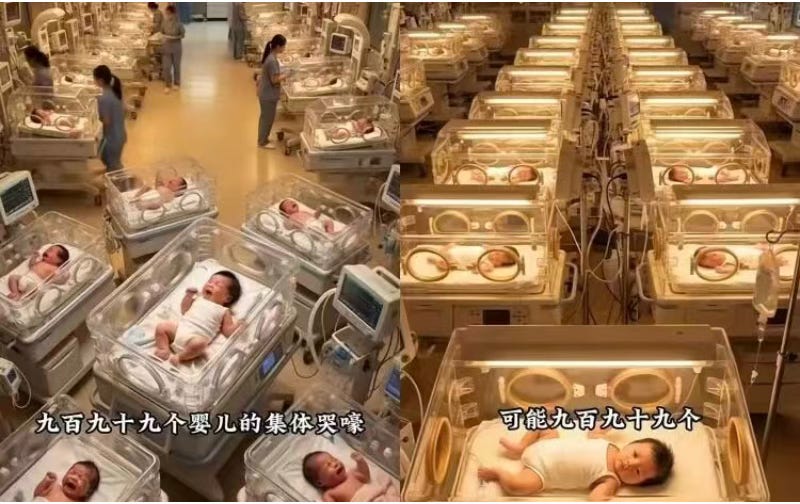
The problem of “involution”, often cited in regard to China’s manufacturing overcapacity, is also apparent in the market for AI video content, where over 90% of releases in the year to August were AI-generated but vanishingly few turned a profit. Recently, an excess of AI-generated slop has led to backlash from audiences, and the state broadcast regulator has signalled a pivot to supporting human actors. Some AI drama script formats which are actually popular—such as a woman giving birth to 999 children—have been frowned upon by state media and removed (possibly due to their flippant treatment of the birth rate, a solemn topic).
This combination of strong early support and subsequent regulatory dampening resembles the Chinese government's approach to other emerging industries. State-led anti-involution campaigns have previously tried to rein in price wars in EV and digital service sectors without refuting the underlying investment logic.
As such, this is best read as a course adjustment rather than a U-turn on the forward-leaning posture for AI diffusion in the sector. While signalling support for human actors, the regulator also emphasised the potential to gain a comparative advantage in AI-generated content through exports: “internationally, we must make good use of the new impetus AI provides and consolidate China’s leading position in exporting microdramas”.
READ MORE
Why China’s Football Problem Is an Economic Problem | Li Xunlei| (28 August)
Li Xunlei, chief economist at the securities firm Zhongtai International, is among the most engaging proponents of economic rebalancing in China. In the this article, he cites China’s World Cup qualification woes as among the consequences of a growth model that prioritises fixed-asset investment. With returns on investment falling and growth in local government debt outpacing GDP growth, Li presses the case for an urgent shift towards growth anchored in household consumption and argues that failure to carry out such a shift represents an obvious, but neglected, risk factor in China’s economy. Read here

Sun Liping and Li Daokui Debate China’s Disconnected Growth (20 August)
Whether expressed as “strong supply, weak demand”, overcapacity or some form of a “K-shape”, a consensus has emerged that insufficient demand is the central weakness of the Chinese economy. The persistent debate centres on how best to fill that demand gap. Here, Li Daokui argues that while new industries have failed to expand sufficiently to replace the old ones, the deflationary “black hole” of local government finances has exerted a cooling effect on the entire economy. In the same edition, Sun Liping provides a riposte to Li Daokui’s diagnosis. Read here