



Discussions of the geopolitical opportunities the US-Israeli war with Iran may afford China are captivating, not least because they flatter a certain liberal consensus that Trump’s war is a grave strategic error.
But it would be a mistake to read the war with Iran as a straightforward boon for China. The piece below by Peng Shaozong instead lays out a wide range of risks for China in stark detail, arguing that “the commodity price volatility triggered by the escalation of the current US-Iran conflict has had a systemic [系统性] and greater-than-expected [超预期] impact on China’s economy, with [the potential to generate] repeated disruptions [反复性特征].”
The discussion we’ve observed so far has been mixed, reflecting the reality that the war presents China with an ambivalent set of risks and opportunities.
On the “opportunity” side of the ledger are the obvious benefits of a strategic rival being weighed down in a potential quagmire. A number of authors echo the widespread observation that this is America’s “Suez Canal Moment”, that the war might undermine the petrodollar, and that it will lay bare the fragility of the US alliance system. Beyond that are arguments that the war is not merely a setback for the US, but an active opportunity for China—most prominently, the claim that high oil prices act as a de facto carbon tax, benefiting China as the centre of the global green economy.
In a recent Sinification translation of a censored memo by the Chinese think tank Intellisia, the authors argued that a protracted Middle East conflict would not only drain US resources, but also reroute capital, energy flows and supply chains in Beijing’s favour. And in our March digest, we highlighted a piece by Renmin University professor Di Dongsheng arguing that higher energy prices are, on balance, a net gain for China because they improve the relative competitiveness of Chinese manufacturing even as they raise absolute costs.
That argument was made all the more intriguing by the fact that, in a post on the same theme a few days earlier, Di appeared either unable or unwilling to spell it out directly, instead promising an explanation and then conspicuously withholding it. Although the general mood among commentators has hardened into something between consternation and Schadenfreude, there remains persistent sensitivity around discussing the war’s “opportunities”, Beijing preferring to portray China as a neutral mediator and promoter of peace rather than a war profiteer.
There is, of course, also sensitivity around portraying the consequences as too severe, with most commentaries stressing China’s resilience and large energy reserves, which makes it all the more striking to see someone with Peng Shaozong’s institutional standing be so upfront about the risks this conflict poses to his country.
Peng was formerly a senior analyst at the influential National Development and Reform Commission (NDRC) and is now Vice-President of the China Society of Economic Reform, a state-affiliated think tank supervised by the NDRC, so his words carry a certain weight.
Another important piece that captures both sides of the ledger is a recent article by senior economist Lian Ping (连平), which argues that higher oil prices would raise imported inflation, squeeze household consumption, crush margins for oil-intensive midstream and downstream firms, depress investment, and put pressure on China’s trade balance and the renminbi. But Lian does not present the shock as wholly negative: he also argues that sustained high oil prices could ease deflationary pressure, boost upstream energy profits, accelerate the development of new energy industries, encourage energy conservation and industrial upgrading in China, and advance both energy diversification and renminbi internationalisation. Yet he stops short of saying whether, on balance, he thinks the conflict is more likely to benefit his country or harm it.
There is no shortage of worthwhile analysis on the Iran crisis at the moment, much of which we are still working through. But on the fairly binary question of whether the war is “good” or “bad” for China, the answer is the unsatisfying one: both. As ever, the real interest lies in the detail: the conflict presents China with both risks and opportunities, and the balance between them will shift with the war’s duration and trajectory.
— Jacob Mardell
Key Points
Since the escalation of the US-Iran conflict, commodity markets have been driven by war risk, speculation and hoarding, with price shocks cascading from upstream inputs to downstream firms.
China’s exposure is acute and highly concentrated: crude oil import dependence stands at 72.7%, while 45-50% of imported crude and 38% of imported natural gas transit the Strait of Hormuz.
The baseline scenario is a cycle of “fighting punctuated by talks” [打谈反复], with oil prices fluctuating at $90-130 per barrel for roughly three months and imported pressures intensifying periodically.
Iran is both a major oil exporter and a key supplier of chemical inputs, so supply disruption can generate multiplier effects [乘数效应] across chemical, agricultural and textile supply chains.
The conflict also exposes a helium bottleneck [卡脖子]: disruption at Ras Laffan (Qatar’s main LNG and helium export hub) cuts over one-third of global supply, worsening vulnerabilities in semiconductors and MRI-related medical equipment.
Tuvia Gering recently published a translation and analysis of this article in his excellent newsletter, Discourse Power, and we are happy to highlight his earlier coverage here.
Disruptions in South Korea’s petrochemical chain raise logistics and delivery risks for China, with some closely linked sectors already facing “production halts due to material shortages” [停工待料].
The core policy logic is to use the certainty of domestic supply assurance and price stability to offset external geopolitical uncertainty [以国内确定性对冲外部不确定性], combining short-term emergency response, medium-term adjustment and long-term strategic planning.
Immediate priorities are tiered emergency measures: reserve releases, import diversification, substitution away from the Middle East and stronger market oversight to curb panic-driven speculation.
Medium-term adjustment focuses on containing inflationary pass-through, easing pressure on downstream firms, expanding hedging and credit support, and using stronger domestic circulation to cushion external shocks.
Long-term resilience depends on stronger energy reserves, better monitoring and early warning, tighter cross-departmental coordination, diversified import channels and faster energy transition and substitution.
The Author
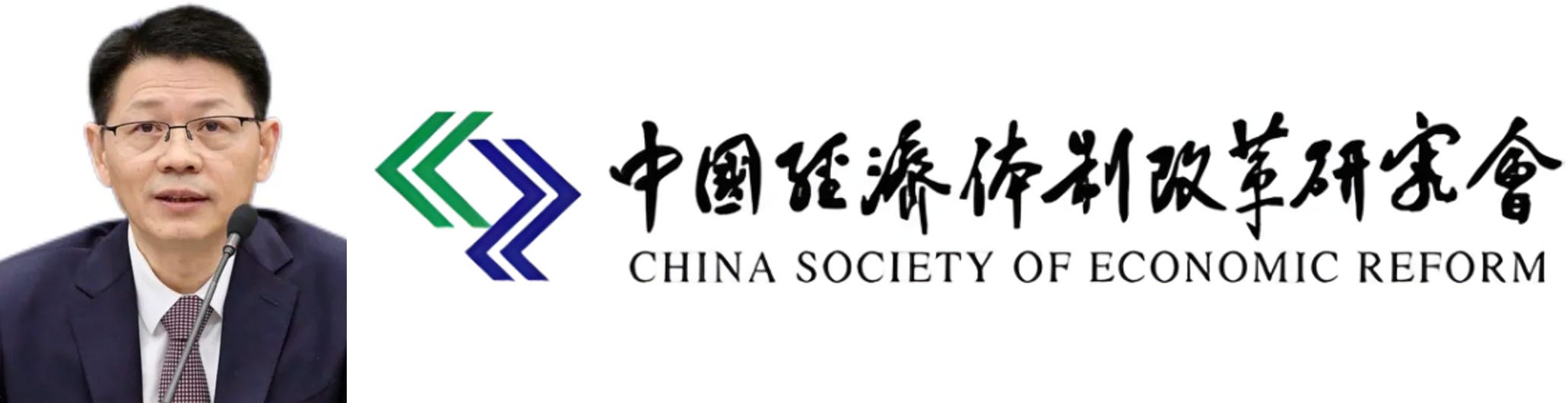
Name: Peng Shaozong (彭绍宗)
Position: Vice President, China Society of Economic Reform
Previously: Deputy Director and First-Level Inspector, Department of Price, National Development and Reform Commission (NDRC)

ENSURING SUPPLY AND STABILISING PRICES FOR BULK COMMODITIES AMID THE MIDDLE EAST CRISIS: SITUATION ASSESSMENT AND TIERED RESPONSE RECOMMENDATIONS
Peng Shaozong (彭绍宗)
Published by China Society of Economic Reform, 27 March 2026
Translated by Cherry Yu
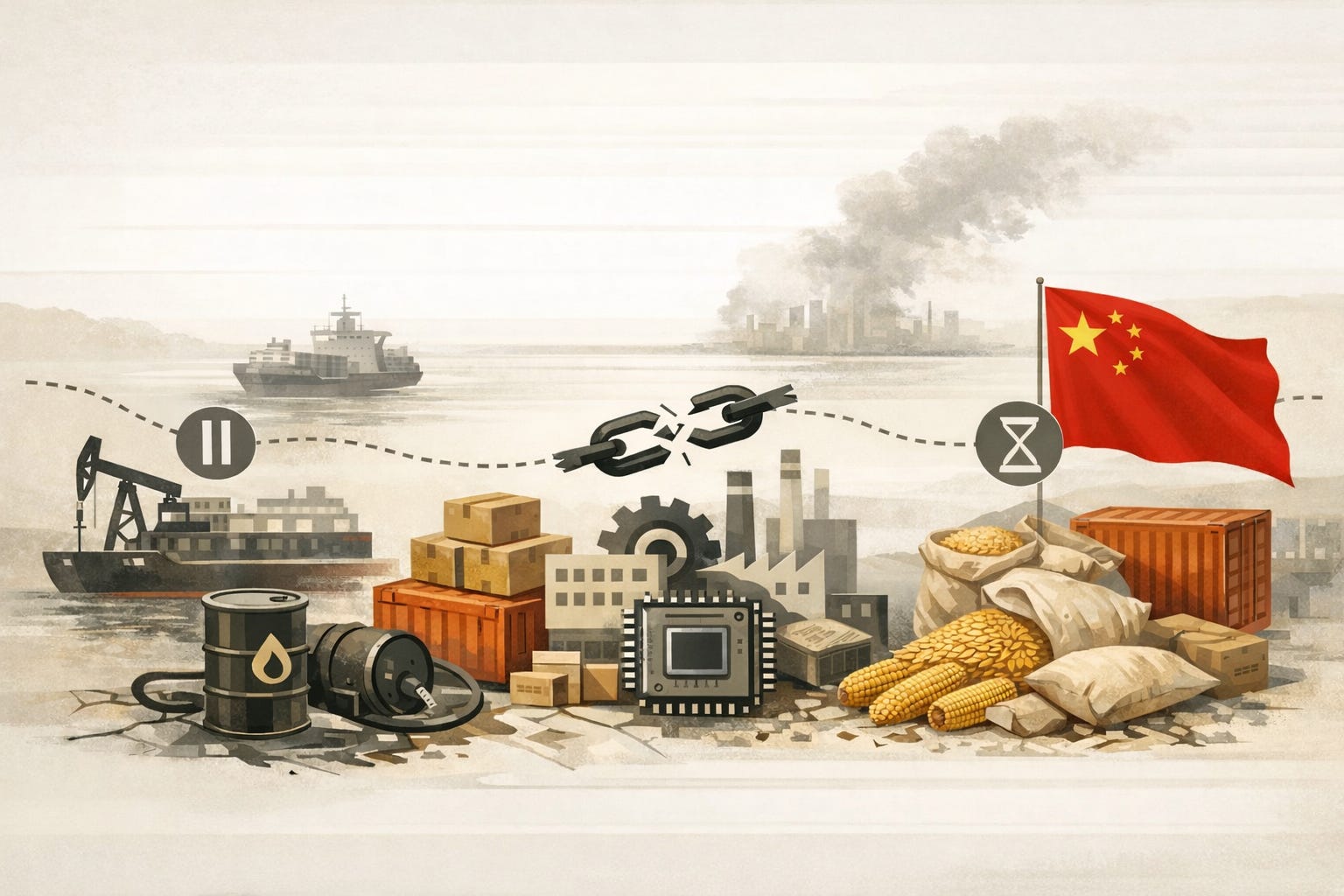
(Illustration by ChatGPT)
The current geopolitical situation in the Middle East is characterised by sudden outbreaks, repeated escalations and high intensity. The continuing escalation of US-Iran confrontation has triggered sharp turmoil in global energy markets, making supply security and price stability in bulk commodities a critical task for sustaining China’s steady economic performance. Accurately assessing how the situation may evolve and formulating graded and categorised response strategies is of major practical significance for defusing imported risks and ensuring the stability of [China’s] supply chains.
I. The Situation in the Middle East and Commodity Markets: Core Indicators of the Shocks and Three Scenario Forecasts
In recent days, international commodity markets have entirely decoupled from traditional supply-demand fundamentals, marked by large price swings, rapid transmission, strong linkage effects, and repeated conflict-driven increases in risk premiums, inflicting a fundamental shock to the global energy supply system.
(A) Core Data: Direct Indicators of Shock Intensity and Key Transmission Channels
Dependence on the passage has reached a critical threshold. Roughly 20 million barrels of crude oil pass through the Strait of Hormuz each day, accounting for 30% of global seaborne oil trade and 20% of global oil consumption, with 84% of that volume bound for Asian economies. Around 45%-50% of China’s imported crude oil (4.6 million barrels per day) and 38% of its imported natural gas must transit this route, continuously expanding the risk exposure from dependence on a single shipping lane.
External dependence remains high. In 2025, China imported 578 million tons of crude oil, with an external dependency rate of 72.7%; its external dependence on natural gas stood at 40.5%, with Middle Eastern imports accounting for 52% and 38% of crude oil and natural gas respectively. Combined with China’s heavy reliance on Iranian supplies in chemicals and agricultural inputs, the bombing of Kharg Island brought Iranian crude oil and chemical exports to a near standstill, further intensifying supply-side uncertainty. Any renewed escalation in the Middle East will directly impact the supply stability of related domestic industries.
[Note: U.S. officials said the strikes on Kharg Island targeted military sites rather than oil infrastructure, and Reuters later reported that Iranian oil production and exports continued without interruption after the attack. The extent of disruption to chemical exports is less clear.]
Price and logistics volatility has reached record highs. On March 9, West Texas Intermediate (WTI) crude hit an intraday high of $119.48 per barrel, while Brent crude reached $119.50 per barrel, approaching the $120 mark for the first time since 2022. Very Large Crude Carrier (VLCC) freight rates surged to $280,000 per day, their highest level since 2008. Asian spot LNG prices rose by over 50%, basic chemicals such as methanol and ethylene rose 15–30% in tandem and shipping insurance premiums skyrocketed by more than 300%. Damage to transport infrastructure on Kharg Island brought Iranian crude export routes to a complete halt, while tightened controls on the Strait of Hormuz forced frequent global tanker route adjustments, sharply raising both logistics costs and geopolitical risk premiums.
(B) Three-Scenario Forecast: Outlook for the Evolution of the Situation [in Iran] and Price Trends
Based on core variables such as intensity of the conflict, the degree of control over shipping lanes and the recurrence of US-Iran confrontations, the following tiered forecasts are made for the trajectory of the Middle East conflict and international oil prices. Market characteristics and impacts under each scenario are as follows:
Baseline scenario (most likely): The US-Iran conflict exhibits a recurring pattern of “fighting punctuated by talks” [打谈反复], with the Trump administration claiming that Iran has been defeated while refusing a deal. Iran continues to permit limited passage through the Strait of Hormuz for vessels not associated with the United States, Israel or Europe, while slow progress in repairs on Kharg Island means Iranian crude exports are unlikely to recover in the near term. OPEC+ maintains its pause in output increases and countries such as Iraq and Kuwait continue production cuts due to insufficient oil storage capacity. Both Japan’s release of petroleum reserves and supply-chain disruptions in South Korea create regional supply disturbances, making it difficult to offset the global crude supply gap effectively. International oil prices will fluctuate at a high level of $90-130 per barrel for around three months. Amid the repeated back-and-forth of geopolitical confrontation, the oil price risk premium remains elevated, global inflation becomes more persistent, and imported pressures on China persist and intensify periodically.
Pessimistic scenario (second most likely): The conflict escalates further, with the US intensifying strikes on Iranian energy infrastructure. Iran fully blockades the Strait of Hormuz and broadens the scope of its countermeasures against US and Israeli targets. Energy facilities in oil-producing countries such as Saudi Arabia and the United Arab Emirates are drawn into the conflict, while insufficient oil storage capacity in Iraq and Kuwait leads to deeper production cuts. OPEC+ has no plans for additional output increases, leaving more than 20 million barrels per day of global crude supply disrupted. Once oil prices break above $130 per barrel, they could surge towards $160, and institutions such as Macquarie estimate that the crude market may enter a “phased collapse” [阶段性崩溃] as the supply side contracts across the board. CICC forecasts that if the Strait closure and the interruption of Iranian exports continue into the second quarter, Brent’s central price level will rise above $140 per barrel, raising the risk of global stagflation. In this scenario, China’s chemicals, agriculture, and high-end manufacturing sectors would face across-the-board supply and price shocks, while the spillover effects from disruptions in South Korea’s petrochemical supply chain would further hit China’s own supply chains.
[Note: CICC warned that a Strait of Hormuz disruption persisting into Q2 would push the Brent oil price centre above $120 per barrel. The $140 figure appears to derive from a separate CICC scenario in which supply disruptions of 6 months or more push oil prices to $140-160 per barrel.]
Optimistic scenario (low probability): Under strong international mediation, the United States and Iran reach a phased ceasefire agreement. Iran gradually eases its controls over the Strait of Hormuz, while the United States halts strikes on Iranian energy facilities and allows repairs on Kharg Island to proceed. Countries such as Iraq and Kuwait gradually restore production capacity and OPEC+ resumes increasing output. As the geopolitical risk premium fades, international oil prices fall back to around $80 per barrel or below. Commodity markets return to being driven by underlying supply-and-demand fundamentals, supply systems in Asian countries such as Japan and South Korea gradually recover, and the imported shock on China gradually eases.
II. The Spillover Effects of Developments in the Middle East on China’s Economy: Cross-Sector Transmission and Multiple Risk Channels
The impact of the Middle East situation on China is marked by rapid transmission, broad reach, extended knock-on effects [链条长] and repeated disruptions. Through three main channels—oil, natural gas and key chemical products—these effects are spreading across all sectors of China’s real economy, posing a sustained challenge to the country’s efforts to stabilise growth, prices and employment.
(A) Direct Impact of Energy Prices: Manufacturing Costs Rise Across the Board
The sharp surge in international oil prices has directly driven up domestic procurement costs for refined oil products, chemical feedstocks and industrial fuels. Repeated US-Iran confrontation has continued to push up the oil price risk premium, further amplifying both the scale and persistence of price increases. As a result, overall costs in energy-intensive sectors such as logistics, transport, aviation, shipping, steel and non-ferrous metals have risen by 15-25%, severely squeezing [Chinese] corporate profit margins. At the same time, natural gas prices have also soared, affecting not only residential heating and other basic livelihood needs, but also pushing up the cost of industrial gas use and thermal power generation, thereby intensifying the dual pressure of electricity and energy costs on the manufacturing sector. Some small and micro-manufacturing firms have already fallen into the predicament of “operating at a loss from the outset” [开工即亏损]. The recurring nature of geopolitical tensions has made it far more difficult for firms to predict costs, leading to more conservative production and operating decisions and a marked decline in willingness to expand capacity and invest.
(B) Deep Spillovers Along the Chemical Industry Chain: How a “Drop of Oil” Triggers Multiplier Effects
Iran is not only a major global oil exporter, but also a key supplier of critical chemical products. Disruptions to its supply have a pronounced multiplier effect [乘数效应] on China’s manufacturing sector, affecting both upstream and downstream segments of the industrial chain and setting off a transmission chain of raw material supply disruptions, surging prices, and pressure on downstream end users.
Shortages of basic chemical feedstocks are widening. Around 45% of China’s imported methanol and 10% of its imported polyethylene come from Iran. The conflict has led to a sharp drop in operating rates at Iranian chemical plants and a halt in exports, driving methanol and ethylene prices up by 15-30%. This has directly increased the cost of products such as plastics, rubber, coatings and solvents in China, with the effects then passing through to downstream manufacturing sectors including home appliances, automobiles, packaging and furniture.
Soaring agricultural input costs are hitting agricultural production. Iran is the world’s second-largest exporter of urea and an important supplier of sulphur. 56% of China’s sulphur imports come from the Middle East. Sharp increases in fertiliser feedstock prices have pushed up the prices of agricultural inputs such as urea and phosphate fertilisers, directly increasing the cost of spring ploughing and cultivation, and threatening China’s food security and the stability of agricultural product prices. The recurring nature of [the current] geopolitical conflict has kept agricultural input prices fluctuating at elevated levels over a prolonged period, continuously intensifying cost pressures on agricultural production and making agricultural input firms more cautious in their production and inventory decisions.
The chemical fibre and textile industry chain is under pressure across the board. Products derived from crude oil cracking are core feedstocks for the chemical fibre industry, and rising crude oil and naphtha prices are driving up the rigid production costs of chemical fibre products such as polyester and nylon. This, in turn, is increasing export costs for the textile, apparel and home furnishing sectors, significantly weakening their competitiveness in international markets and compressing profit margins across the industry. Cost volatility is exposing firms’ export orders to the risk of contract breaches, while the East Asian supply-chain ripple effects caused by disruptions in South Korea’s petrochemical industry chain are further increasing logistics and delivery risks in China’s chemical fibre and textile export segment.
(C) The Dual Shock of Critical Raw Materials and Logistics: Intensifying “Bottleneck” Risks in [China’s] Supply Chains
Hidden risks in high-end manufacturing are becoming more pronounced. In March 2026, Qatar’s Ras Laffan gas field was forced to suspend operations because of the regional conflict, disrupting more than one-third of global helium supply and triggering supply-chain crises in key industries worldwide, including semiconductors and MRI equipment. This will directly undermine the stability of production in China’s semiconductor and related industrial chains, further intensify “bottleneck” risks in the chip sector and constrain the upgrading of China’s high-end manufacturing industries.
Disruptions to [global shipping and] logistics networks are driving up operating costs. Oil tankers and cargo vessels are being forced to reroute around the Cape of Good Hope, increasing voyage distances by 40% and extending shipping times by 10 to 14 days, while marine insurance premiums have surged by more than 300%. At the same time, tanker route planning has been repeatedly adjusted and, in some cases, brought to a complete halt, driving up both logistics and time costs. China’s crude oil shipments not associated with the United States, Israel or Europe are also facing procedural complexities and lower customs-clearance efficiency due to tighter Strait controls. As a result, logistics costs for imported manufacturing inputs and exported finished goods have risen sharply, delivery cycles have lengthened significantly, and some industries closely linked to South Korean supply chains are already at risk of being forced to “halt production due to material shortages” [停工待料]—a development that poses a serious challenge to the stability of [our] supply chains.
(D) Disturbances to Market Expectations: Profit Squeeze Across Industries, Compounded by Speculative Activity
Sharp fluctuations in commodity prices have drawn speculative capital into the market, further amplifying market panic. Some traders have engaged in hoarding, price gouging, and other such practices, further increasing the scale of price volatility and creating a rigid transmission chain in which upstream price increases translate into pressure on the midstream and losses downstream [上游涨价→中游承压→下游亏损]. In particular, small and micro manufacturing firms—which have weaker risk resistance—have been hit the hardest, with some sectors already experiencing situations in which costs exceed selling prices and operating capacity rates remain too low [成本倒挂、开工不足]. As the unpredictability of the geopolitical situation continues to intensify, panic-driven market expectations and pressures on firms’ real-economy operations are reinforcing one another, not only compressing corporate profit margins but also creating a persistent challenge to the security of China’s supply chains.
III. Tiered and Categorised Policy Recommendations: Using Domestic Certainty to Offset External Uncertainty
Against the backdrop of profound uncertainty in the Middle East and sharp volatility in commodity markets, [China’s] core approach should be to use the certainty of domestic supply assurance and price stability to offset the uncertainty of external geopolitical conflict and the extreme risks arising from repeated US–Iran confrontation. The strategy calls for coordinated short-term emergency measures [短期应急], medium-term adjustment [中期调节], and long-term strategic planning [长期布局], supported by precise, tiered and categorised policy measures. It also requires stronger preparedness for extreme geopolitical scenarios, determined efforts to uphold the bottom line of supply security and price stability, effective containment of inflation transmission and the prevention and mitigation of systemic risks.
(A) Short-Term Emergency Response (1-3 months): Rapid Action to Safeguard the Bottom Line of Supply Security
In responding to extreme geopolitical scenarios, policy should focus on filling supply gaps, stabilising market prices and preventing speculative activity. Reserve adjustments, import substitution and market regulation should be deployed promptly to defuse immediate supply and price risks, to give priority to meeting the energy and material needs of households and key sectors, and to stabilise market expectations.
Reserves should be mobilised on a tiered basis to smooth price volatility with precision. A three-tier warning system should be triggered according to the scale of oil price increases. Under a blue alert ($100-110 per barrel), 5-8 million tonnes of state strategic petroleum reserves should be released in coordination with commercial reserve releases by Chinese enterprises. Under a yellow alert ($110-130 per barrel), the scale of reserve releases should be increased to 10-15 million tonnes, while state natural gas reserves should also be deployed. Under a red alert (above $130 per barrel), the highest-level emergency reserve release mechanism should be activated, with the release volume appropriately increased to more than 20 million tonnes, in order to safeguard firmly the bottom line on energy supply for basic livelihood needs.
Supply sources should be diversified [多元替代] to ensure continued supply-chain stability. By the end of April 2026, the share of crude oil imports from non-Middle Eastern channels—including Russia, Central Asia, Africa and South America—should be raised to above 55%, while cross-border oil and gas pipelines should be run at full capacity and plans for substituting heavy crude should be accelerated. Maritime route planning should also be optimised to avoid the geopolitical risks associated with the Strait of Hormuz, with additional transport capacity allocated to alternative shipping routes and Middle Eastern crude oil rerouted via the Red Sea and the Suez Canal. In response to regional supply gaps caused by disruptions in South Korea’s petrochemical industry chain, contingency plans to ensure domestic chemical supplies should be prepared in advance to prevent regional spillover effects from hitting the domestic market. Imports of methanol, sulphur, urea and other chemical products from non-Middle Eastern sources should also be expanded to reduce dependence on Iranian chemical feedstocks. China should engage African oil-producing countries at an early stage, implement measures to facilitate customs clearance for crude oil imports, seize the policy window created by the entry into force on 1 May of zero tariffs on crude oil from 53 African countries, expand crude imports from Angola, Nigeria, Algeria and other African producers, and simultaneously enhance refinery capacity to process and adapt to African crude.
[Note: China did announce zero-tariff treatment for imports from 53 African countries from 1 May 2026. However, crude oil (HS 2709) already enters China duty-free under the MFN tariff, including from Africa’s main suppliers.]
Market oversight should be strengthened to curb speculative activity resolutely. Round-the-clock price monitoring should be conducted for key commodities including crude oil, refined oil products, chemical products and fertilisers, while enforcement against panic-driven market speculation should be stepped up. Hoarding, price gouging, malicious speculation and similar practices should be dealt with severely, and representative cases should be exposed publicly to create a deterrent [形成震慑]. Risk-control parameters in the futures market should also be adjusted, with margin requirements and transaction fees for relevant contracts raised to restrain excessive speculation, particularly to guard against irrational volatility if oil prices break through $130 per barrel.
(B) Medium-Term Adjustment (3-12 months): Targeted Measures to Cut Off Inflationary Pass-through
Policy should focus on reducing business costs, easing operational difficulties and expanding domestic demand in order to relieve persistent cost pressures. This can be achieved through differentiated price regulation, targeted financial support and smoother domestic economic circulation, thereby easing pressure on downstream firms, containing inflation risks and stabilising the real economy.
Prices should be regulated in a differentiated manner to ease pressure on downstream sectors with precision. Temporary price subsidies should be provided in livelihood-related areas such as public transport, taxis, agriculture and residential gas use, with the duration of such support adjusted dynamically in line with both the trajectory of the US–Iran conflict and fluctuations in oil prices in order to address sustained upward price pressures. Targeted energy-cost subsidies should also be provided to logistics firms and small, medium and micro-sized manufacturing enterprises, with particular support directed towards industries that are closely linked to South Korean supply chains and more severely affected by supply disruptions. Minimum fertiliser production targets should be implemented, with priority given to ensuring energy and material inputs required for fertiliser production, so as to stabilise agricultural input prices and fully safeguard spring planting.
Financial instruments should be improved to hedge operational risks more effectively. Large refining, foreign-trade and manufacturing companies should be encouraged to use derivatives such as futures, options and swaps to lock in import costs, while bespoke hedging products should be developed to address geopolitical risks such as recurring disruptions to navigation through the Strait of Hormuz and delays in repairs on Kharg Island. Financial institutions should be supported in broadening the coverage of foreign-exchange risk management tools and encouraged to step up credit support for firms involved in ensuring energy supply and stabilising supply chains. Targeted credit relief should also be provided to severely affected small, medium and micro enterprises, with differentiated credit policies [差异化信贷政策] put in place to ensure that loans are not withdrawn, cut off or called in prematurely.
Domestic circulation should be kept flowing smoothly, with domestic demand serving as a buffer against external shocks. Tax and fee cuts should be stepped up, while differentiated policies to reduce energy consumption and operating costs should be introduced for energy-intensive industries, alongside support for firms undertaking technological upgrades to improve their energy efficiency. Measures to stabilise consumption should also be implemented to unlock demand for major consumer items [大宗消费] such as automobiles, home appliances and green building materials. In this way, the stability of the domestic economic cycle can be used to cushion the sustained external shocks generated by repeated US-Iran flare-ups, reduce dependence on linked segments of East Asian supply chains and use the stability of the domestic economy to cushion China against imported [inflationary and supply-side] pressures.
(C) Long-Term Strategic Planning (1-3 years): Strengthening Foundations [固本强基] and Enhancing the Security Resilience of [China’s] Industrial Chains
Policy should focus on strengthening resource security, addressing weaknesses in industrial chains and advancing the energy transition [强资源基础、补产业链短板、促能源转型], so as to fundamentally reduce [China’s] dependence on Iran and other geopolitically high-risk parts of the Middle East for critical resources. This will require efforts to diversify imports, strengthen strategic reserves, advance the energy transition and improve self-sufficiency to ensure supply security, thereby reducing China’s external dependence at its root and enhancing both the autonomy and controllability [自主可控能力] of bulk commodity supplies and the resilience of its supply chains.
Energy import diversification should be deepened by building a multi-channel, multi-source supply system. Long-term cooperation with major oil-producing countries should be consolidated through the signing and renewal of long-term crude oil and natural gas supply contracts to lock in import volumes and benchmark prices. Cooperation on oil and gas resources in non-Middle Eastern regions—including Central Asia, Latin America, and Africa—should be expanded, with efforts accelerated both to reduce the share of crude imports from the Middle East to below 45% and to lower dependence on Iranian crude oil and chemical feedstocks. Building on the zero-tariff policy for imports from 53 African countries, China should pursue long-term supply, exploration and development agreements with key African producers, lower the overall cost of African crude oil imports, and treat the share of African crude oil in non-Middle Eastern imports as a core metric for assessing progress in supply diversification. Capacity along overland energy corridors should be increased to create a dual-track energy transport system centred on land routes and supported by maritime routes [陆上为主、海上为辅], thereby reducing vulnerability to the geopolitical risks of relying on the Strait of Hormuz as a single maritime chokepoint. Maritime route planning should also be optimised to develop an integrated land-and-sea energy transport network.
[China’s] strategic reserve system should be strengthened to reinforce the core line of defence for ensuring supply and stabilising prices. The scale of strategic reserves of oil, natural gas, coal, key chemical products and fertilisers should be expanded with precision, while the minimum level of strategic petroleum reserves should be raised to above 500 million barrels in preparation for extreme geopolitical scenarios such as repeated US–Iran flare-ups, a full closure of the Strait of Hormuz and a complete interruption of Iranian exports. The geographical distribution of reserves should be optimised by accelerating the development of both coastal and inland storage bases and establishing a three-tier reserve system comprising state reserves, corporate commercial reserves and social reserves. China should also adhere to a dynamic adjustment strategy of: restocking at low prices and releasing reserves at high prices [低价补库、高价放储], while clearly specifying the timing, scale and methods of reserve releases under different scenarios, formulating dedicated emergency release plans and strengthening operational capacity in reserve deployment.
Energy transition and substitution should be accelerated to reduce dependence on fossil fuels. Clean energy sources—including wind, solar, nuclear and hydropower—should be developed vigorously, while the construction of a new power system should be steadily advanced to raise the share of non-fossil energy in [China’s] overall energy consumption. Support should also be expanded for alternative energy industries such as coal-to-liquids and coal-to-gas, biofuels and hydrogen, while refining and petrochemical enterprises should be encouraged to optimise their processes and strengthen their capacity to process heavier crude grades. At the same time, greater investment should be directed towards domestic technological R&D and industrial-scale production of key raw materials for which Iran is a major supplier, including high-purity neon, methanol and polyethylene. Dedicated national-level technology programmes [国家级技术攻关专项] should be established to secure autonomous and controllable supplies of these critical inputs. Efforts should also be stepped up to strengthen domestic supply security for key materials such as chemical products, chemical fibres and semiconductor materials, thereby helping address weaknesses in [our] industrial chains.
IV. Systemic Support Measures: Strengthening Accountability Across All Parties and Enhancing Operational Capacity for Policy Implementation
To ensure that tiered and categorised response policies are effectively implemented and that China’s defences for ensuring commodity supply security and price stability are firmly reinforced, a systematic and comprehensive support framework should be built across five areas: monitoring and early warning [监测预警], coordinated response [协同联动], international cooperation [国际协作], capacity building [能力建设] and operational drills [实战演练]. This will strengthen response capabilities, promote more precise and practical implementation across all areas of work, and ensure robust responses [应对有力], orderly handling [处置有序] and effective guarantees [保障有效].
(A) Building a Comprehensive, Round-the-Clock Monitoring and Early Warning System to Improve the Accuracy of Risk Forecasting
An integrated monitoring network combining geopolitics, markets and supply chains should be established. Data from multiple departments—including the National Development and Reform Commission, Ministry of Foreign Affairs, Ministry of Commerce, the National Energy Administration and the General Administration of Customs—should be integrated to enable 24/7 real-time monitoring of key indicators such as the progress of repairs on Kharg Island, changes in navigation conditions in the Strait of Hormuz, production-capacity shifts in countries such as Iraq and Kuwait, the pace of Japan’s petroleum reserve releases, the recovery of South Korea’s petrochemical supply chain, OPEC+ production-adjustment plans, international oil prices, shipping indices, domestic refinery operating rates and inventory levels. This should be institutionalised through a regular working mechanism involving daily monitoring, weekly analysis and monthly assessment.
[Our] tiered early-warning system and authoritative information-release mechanism should be improved. Clear standards should be established for different warning levels, with additional trigger conditions introduced for extreme geopolitical scenarios. The trigger thresholds, responsible departments and response requirements for each level should be clearly defined. Assessment conclusions and policy guidance should then be communicated in a timely manner to markets, businesses and the public through authoritative channels in order to stabilise expectations and prevent panic buying and irrational speculation.
Greater support should be provided through big data and predictive modelling. Macroeconomic models, geopolitical scenario models and price-transmission models should be used to generate quantitative estimates of oil price movements, import costs and inflationary impacts under different conflict scenarios. Model parameters should be adjusted dynamically in light of assessments produced by specialist institutions, so as to provide a sound data basis for activating tiered contingency plans, releasing reserves and making policy adjustments, while enhancing the foresight [前瞻性] and precision [精准性] of decision-making.
(B) Establishing Cross-Departmental and Cross-Regional Coordination Mechanisms to Strengthen the Collective Effort Behind Supply Assurance and Price Stabilisation
A dedicated task force on ensuring commodity supply and stabilising prices should be established. Led by the National Development and Reform Commission and bringing together the energy, finance, commerce, market regulation, financial regulation and transport authorities, it should operate through a coordinated working mechanism combining weekly consultations, monthly coordination and emergency activation. A dedicated working group on US-Iran geopolitical developments should also be established to track developments in real time. Work on reserve releases, import adjustment, price supervision and financial support should be coordinated in a unified manner to avoid fragmented policymaking [政策碎片化] and uncoordinated action [行动不同步].
Responsibility should be firmly assigned across the three levels of central coordination, local implementation and enterprise-level delivery. At the central level, responsibilities should include the deployment of strategic reserves [战略储备调度], the formulation of macroeconomic policy, international coordination and the development of emergency contingency plans for extreme geopolitical scenarios. Local governments should be responsible for ensuring market supply within their jurisdictions, supervising prices, safeguarding basic livelihoods, supporting distressed firms [企业纾困] and implementing local supply-security measures in response to repeated US–Iran confrontation. China National Petroleum Corporation, Sinopec, China National Offshore Oil Corporation and key refining and trading enterprises should bear primary responsibility for ensuring supply by formulating firm-level contingency plans and maintaining adequate inventories, stable production and uninterrupted supply. The central government, local authorities and enterprises should also regularly review the feasibility of these plans, the degree of interdepartmental coordination and the timeliness of response, so as to identify shortcomings promptly, refine the plans accordingly and strengthen their operational effectiveness.
A unified national information platform for ensuring commodity supply security and price stability should be established. The platform should enable real-time data sharing on crude oil imports, inventories, production, sales and transport, thereby breaking down information silos [信息壁垒] across departments, regions and enterprises. It should also include a dedicated section on US–Iran geopolitical risks, with real-time updates on the development of the conflict, progress on repairs at Kharg Island, control measures in the Strait and the status of South Korean supply chains. In the case of emergencies, it should support cross-regional and cross-enterprise mobilisation, with priority given to meeting the energy and material needs of households, agriculture and key manufacturing sectors.
Risk screening and corrective action should be strengthened in key areas. Routine risk inspections should be carried out at critical facilities such as coastal refineries, oil and gas storage bases, cross-border energy corridors and major logistics hubs, with particular attention paid to geopolitical risks along maritime oil and gas transport routes, security along overland energy corridors, and supply risks in segments closely linked to South Korean industrial chains. Infrastructure weaknesses and security vulnerabilities should be addressed without delay to ensure that, even under extreme circumstances, China’s energy supply chains remain resilient under strain—without breaking when disrupted and without grinding to a halt when obstructed [断链不中断、受阻不停摆].
(C) Deepening Multi-Level and Multi-Sector International Energy Cooperation to Stabilise External Energy Supply
The foundations of long-term oil supply cooperation should be consolidated. China should step up engagement with major oil-producing countries such as Russia, Saudi Arabia, the United Arab Emirates, Iraq, Brazil and Angola, as well as push forward the renewal and signing of long-term crude oil and natural gas supply contracts, locking in annual import volumes and benchmark prices. In particular, cooperation should be deepened with partner countries outside the US-Israeli-European alliance network to reduce the impact of short-term price volatility and geopolitical conflict.
Efforts to secure equity interests in overseas oil and gas resources should be expanded. Domestic energy companies should be supported in exploring developing and operating overseas oil and gas fields, with particular emphasis on expanding equity investment in non-Middle Eastern regions such as Africa, Central Asia and South America so as to reduce dependence on resources from the Middle East. The share of independently controlled resources should be increased to enhance the flexibility and stability of China’s energy supply, while priority should be given to establishing alternative overseas supply bases for key raw materials such as high-purity neon and methanol.
China should participate more actively in global energy governance. Drawing on multilateral mechanisms such as the G20, BRICS and the Shanghai Cooperation Organisation, China should call on the world’s major oil producers and consumers to strengthen coordination in order to safeguard the stability of global energy markets, oppose the disruption of energy supply chains caused by unilateral sanctions and military conflict, and work with other countries to urge the United States and Iran to resume negotiations and ease tensions, thereby helping build international consensus on safeguarding the security of global energy corridors. China should also establish regular energy-cooperation mechanisms with African oil-producing countries and the African Union, using the zero-tariff policy on crude oil imports as a basis for consultations on transport-route optimisation, improved customs-clearance efficiency and joint refinery projects in order to enhance the stability and controllability of energy imports from Africa.
(D) Strengthening [China’s] Core Capacity for Ensuring Supply and Stabilising Prices to Underpin its Long-Term Economic Security
The management of strategic reserves should be strengthened through more precise and effective measures. Mechanisms for reserve release, rotation and storage management should be improved, linkages between state reserves and corporate commercial reserves should be strengthened, and reserve deployment procedures should be further streamlined. In extreme scenarios, emergency deployment procedures should be optimised to improve the efficiency of reserve releases. The layout of reserve bases should also be planned more precisely, with faster development of coastal, inland and border storage facilities and particular emphasis on building reserve bases along overland energy corridors so as to reduce exposure to maritime geopolitical risks. At the same time, current shortcomings in [China’s] reserve infrastructure should be addressed.
Domestic capacity for energy production and substitution should be strengthened. Efforts to explore and develop domestic oil and gas resources should be intensified to increase output of unconventional energy sources such as shale oil, shale gas and coalbed methane. Support should also be expanded for R&D and industrial application of core alternative-energy technologies, while industries such as coal-to-liquids, coal-to-gas and biofuels should be promoted on a larger scale. Refining and petrochemical enterprises should be encouraged to undertake technological upgrading to improve their capacity to process heavier and high-sulphur crude oil, with particular emphasis on enhancing their ability to process crude oil imported from Africa. Greater investment should also be directed towards domestic technological development for key raw materials for which Iran is a major supplier, including high-purity neon and methanol. Dedicated national-level technology programmes should also be established to achieve independent domestic production of these inputs.
The policy toolkit for price regulation and market supervision should be strengthened. Price-formation mechanisms for refined oil products and natural gas should be improved, while price-linkage and subsidy policies should be further refined. In response to sustained price increases, a dynamic mechanism for adjusting price subsidies should be established, alongside targeted support [精准托底] for livelihood-related sectors and weak links. Coordinated oversight of both spot and futures markets for bulk commodities should also be strengthened, with regulatory rules refined and targeted measures introduced to contain panic-driven speculation triggered by repeated US–Iran flare-ups. At the same time, regulatory effectiveness should be enhanced to resolutely uphold fair competition and orderly market conditions.
V. Conclusion
The commodity price volatility triggered by the escalation of the current US-Iran conflict has had a systemic [系统性] and greater-than-expected [超预期] impact on China’s economy, with [the potential to generate] repeated disruptions [反复性特征]. It has not only generated direct imported inflationary pressures but also affected the functioning of the real economy through transmission across the entire industrial chain. Ensuring the supply and price stability of bulk commodities is therefore both a tough battle [攻坚战] and a protracted campaign of endurance [持久战].
In the face of a complex and severe international landscape, China must abandon wishful thinking [侥幸心理], adhere to a bottom-line approach [底线思维], prepare for worst-case scenarios [极限思维] and take as its central guiding principle the need to: offset external geopolitical uncertainty through the certainty of domestic supply assurance and price stability [以国内保供稳价确定性对冲外部地缘不确定性]. On this basis, it should establish and improve a three-tier early-warning system and graded response mechanism—blue, yellow and red—while coordinating three categories of policy tools: short-term emergency measures, medium-term adjustment and long-term strategic planning. By building a comprehensive monitoring and early-warning system, a cross-departmental coordination mechanism and a multi-level framework for international cooperation, China can strengthen its capacity to ensure supply and stabilise prices in response to extreme geopolitical risks, tighten accountability at the central, local and enterprise levels, and fundamentally enhance the resilience and security of its energy and supply chains. Only by firmly safeguarding the bottom line of stable bulk commodity supply and prices, and by effectively cutting off the transmission of inflationary pressures, can China prevent and defuse systemic risks, provide solid and reliable support for the steady and healthy functioning of the economy and promote effective qualitative improvement alongside reasonable quantitative growth.
READ MORE
Iran as the "Bridgehead" for Securing China’s Western Frontier | by Zhang Wenmu

With Iran’s future in question, we found this 2013 article by Zhang Wenmu, an old-school strategist from Beihang University, worth revisiting. One conclusion from our briefing on Chinese reactions to the recent US-Israeli strikes is that many analysts appear relatively unworried about the Iranian regime’s immediate prospects. Zhang offers a contrasting perspective—albeit one from over a decade ago—casting Iran as a strategic barrier to NATO’s eastward expansion and the westernmost link in the Zagros–Hindu Kush–Himalaya chain that has historically shielded China from outside powers’ eastward advance. That barrier has not yet collapsed, but it appears more vulnerable now than it has in years. Read in that light, this piece lands rather differently today.
China's Middle East Policy by Peking University Prof. Wu Bingbing

• China pursues ‘balanced diplomacy’ [平衡外交] in the Middle East, which entails not picking sides and not making any enemies.
• To help strengthen its ties with the region, Beijing’s strategy has been one of 'positive balancing' [积极的平衡]. That is, closer cooperation with one actor (e.g. Iran) will pressure others to follow suit (e.g. Arab Gulf countries).
• China’s two main priorities in the region are: (i) resolving the Israeli-Palestinian conflict; and (ii) establishing a Gulf security dialogue platform.
• If Chinese initiatives such as the BRI, GDI and GSI are highly compatible with the region’s need for development and security, ‘Chinese-style modernisation’ is the ideational glue that can help bring countries in the Middle East and China closer together.
Active Neutrality in the Middle East – Chinese Commentary on the US-Iran war

Chinese expert commentary largely recommends pursuing a position of neutrality and mediation in the Iran-US war, with only two senior academics making subtle arguments for a more assertive posture: Zheng Yongnian writes that Beijing should “demonstrate the strength and policies befitting a great power”; Zheng Ge claims that the sustainability of China’s “active neutrality” depends on the war’s direction, noting that meaningful mediation “requires China to transcend its traditional ‘non-interference’ principle”.
The current US attempt to blockade Iranian oil shipments through the Strait of Hormuz (90 percent of which is destined for China) gives new impetus to supply diversification. If continued, this might seem to work to Russia’s advantage. Although China’s policy has been to not rely on any specific source for more than 15% of its petroleum imports, Beijing may find it useful (in the short term, at least) to increase Moscow’s share. Such a move would almost certainly be necessary in any future Taiwan Strait conflict, as the US and allies (if there are any remaining by that point) could restrict shipborne petroleum deliveries.
For this account, “I” may not be singular.
This perspective draws on deep, lived exposure to Greater China—and how it intersects with global markets and policy.
We remain anonymous, for now. The information is public. The interpretation is not.
Follow, subscribe, and challenge us.
From Chokepoints to Consumption: China’s Strategic Pivot in a Fragmenting Worldhttps://igreaterchina.substack.com/p/from-chokepoints-to-consumption-chinas?utm_campaign=post-expanded-share&utm_medium=web