


The Jensen Huang scandal has been covered widely in China, but most commentary has either denied the espionage allegations, or dismissively cast the affair as a “witch hunt”.
Huang Ping’s piece stands out for skipping past the spy concerns and arguing that the US partisan struggles that he sees as driving the scandal is a net opportunity for China.
His emphasis on domestic politics is not unusual, but his analysis of the “tech right” and “new AI elite” is even-handed and he treats the political manoeuvring as worth analysing in its own right rather than as grounds for dismissing the case.
Huang argues that the incoming Democratic Congress spells an end to the rapid data-centre build-out of the last two years and he identifies this as an opportunity for China to use its unified power grid to close the gap with the US in compute capacity.
Strikingly, he also argues that China has a window to seek deeper cooperation with Jensen Huang himself, and with Elon Musk, who he says is likely to be next in the sights of rivals within US institutions.
— Jacob
Key Points
The Jensen Huang scandal is about politics—specifically American domestic politics and everything else is merely a reflection of this domestic political struggle.
The timeline demonstrates that the midterm election result drove the crisis—Huang came forward because he wants to offer “proof of loyalty” to the incoming congressional investigative committees.
The tech right has aligned with Trump, while the new AI elite courts both parties for regulatory stability and government support, leaving it vulnerable as partisan conflict intensifies.
Trump’s closest tech allies are most exposed to Democratic investigations and Musk is likely to be the next target.
This partisan score-settling risks dragging America’s capacity for “zero-to-one” innovation into political uncertainty.
Partisan strife in the United States will inevitably bring uncertainty, as well as risks and opportunities for China, but the opportunities outweigh the risks.
First, the Democrats will inevitably make data centre regulation a priority, providing a window of opportunity for China to close the gap with the US in computing capacity.
Second, amid continuing partisan strife and xenophobia, there is a window of opportunity to attract ethnic Chinese AI specialists in the United States back to China.
Third, this is China’s window of opportunity to pursue deeper cooperation with Huang and Musk themselves.
However, partisan strife will not devour America’s entire computing capacity and technological base. Success or failure hinges on whether China can turn these three windows of opportunity into real capabilities.
The Scholar

Name: Huang Ping (黄平)
Year of Birth: Not publicly disclosed
Position: Associate Professor and Assistant Dean (Student Affairs), School of Public Policy, The Chinese University of Hong Kong, Shenzhen; Deputy Director (Development), The Institute for International Affairs, Qianhai
Research Focus: Sustainability Transitions, Innovation Studies, Economic Geography, Energy Transitions
Education: Dual BS degrees in Management and Economics, Harbin Engineering University, China (2010); PhD in Management Science, Harbin Engineering University, China (2015), jointly trained with Utrecht University, Netherlands
Experience Abroad: Postdoc, The Bartlett School of Architecture, University College London, UK; Postdoc, The Fletcher School of Law and Diplomacy, Tufts University, US; Research Associate, The Urban Institute, University of Sheffield, UK

SACRIFICED TO US PARTISAN STRIFE: JENSEN HUANG IS THE FIRST — WHO WILL BE NEXT? | COMMENTARY ON GEOPOLITICS AND TECHNOLOGY × HUANG PING
By Huang Ping (黄平)
Published by Greater Bay Area Review on 11 November 2026
Thank you to Huang Ping for his permission to share this article
(Lightly edited machine translation)
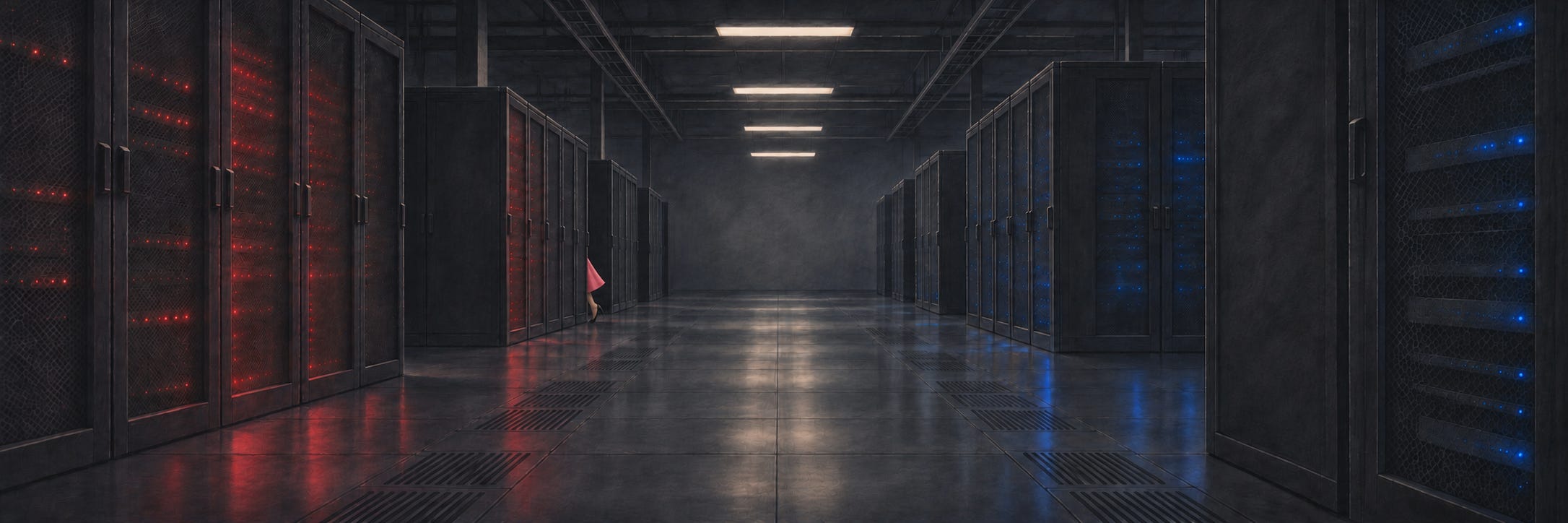
Illustration by ChatGPT
On 8 November, Nvidia founder Jensen Huang issued a public apology in a letter to employees and the wider public, admitting that he had been unfaithful to his wife and apologising to his family and colleagues. Four days earlier, the chairs of three US House of Representatives committees had sent him a joint letter, requesting a closed-door briefing on Nvidia’s security measures and his relationship with Huang Le [Note: also known as Alice Huang]. All three signatories were Republicans.
Earlier, The New York Times had reported, citing US officials, that US authorities suspected Huang Le, a former senior executive at Singapore-based data centre company Megaspeed, of being an intelligence operative. Nvidia’s board announced the launch of an independent investigation on 8 November and the appointment of external lawyers on 10 November. Trump, meanwhile, publicly voiced strong support for Jensen Huang on 9 November, saying that the Federal Bureau of Investigation was looking into the matter. A private romantic entanglement had thus been thrust into the centre of a national security storm.
Public commentary over the past few days has picked over almost every aspect of this affair. The gossip angle focuses on the “extramarital affair” aspect. The financial angle focuses on fluctuations in Nvidia’s share price and the independent investigation urgently launched by its board. The geopolitical angle focuses on “Chinese infiltration” and the US–China contest over chips. The political angle focuses on Huang’s relationship with the Trump administration—over the past year, he has been lobbying the White House to ease restrictions on chip exports to China. Each interpretation makes sense, yet each seems to have grasped only one of the elephant’s legs.
My judgement is straightforward: at its core, this is not about intelligence, not about gossip, not even about capital. It is about politics—specifically American domestic politics. Everything else is merely a reflection of this domestic political struggle. Especially given the Democratic Party’s past form in “politicising intelligence”, this is, in fact, a script some people have seen before. This article answers three questions. First, why say this is “all about politics”? Second, exactly what kind of politics is at work here, how will it unfold and who will be the next to be sacrificed? Third, what does it mean for China and what preparations should we make in advance?
I. What matters is not the affair itself, but the timing of its escalation
First, the matter itself is nothing new. According to BBC Chinese’s account, Trump “had been briefed on the intelligence about a year earlier but had taken no action at the time”. In other words, the so-called intelligence assessment that “Jensen Huang had been compromised” [黄仁勋被渗透] did not first emerge in the past few days. It had long been sitting in the drawers of certain people in Washington. Since none of this was new, the real question became: why now? Why has Jensen Huang only now come forward?
Second, lay out the timeline and the answer emerges. It falls roughly into three stages. The first came before the midterm elections: in late October, The New York Times first reported on this “spy case”, just days before the elections on 3 November. The second came as the votes were counted in the 3 November midterms. The Democrats won a sweeping victory, retaking both the Senate and the House of Representatives in one stroke and flipping several traditionally Republican states. The third came after the electoral dust had settled. Huang publicly apologised on 8 November. On 9 November, Trump voiced strong support and said the FBI had become involved. Several congressional committees requested that Huang attend a closed-door briefing. Within just a few days, the whole affair had blown up. What really drove its escalation was not the report itself, but the election result.
Finally, why did Jensen Huang choose to come forward immediately after the election? My judgement is this: having won both chambers, the Democrats have already secured investigative and subpoena powers. Huang is positioning himself for the coming “congressional reckoning” [国会清算]. Over the past few days, Democrats have also publicly announced plans to investigate Elon Musk once they take control of Congress next January. Huang’s apology is less about explaining himself to his wife than about offering “proof of loyalty” [投名状] to the incoming congressional investigative committees. By first admitting to “moral failings in his private life”, he seeks to keep the fire confined to the private sphere. He wants to prevent the Democrats from following the trail and turning the affair into a public trial over a “failure to safeguard national security”.
The timing is the real key to this story.
II. The two parties and tech capital: from “taking sides” to “settling scores”
To understand why Jensen Huang has been sacrificed and who will be next, we first need to untangle the relationships between American politics and tech capital. There are three sets of relationships here, each building on the last.
The first is the old alignment of Republicans with traditional capital and Democrats with the new tech elite. For a considerable period, each party had its own “core donor base”. Republicans were more closely tied to capital from the old economy—oil, natural gas, coal, the defence industry and traditional manufacturing. Democrats, meanwhile, harvested support from the “new progressive elite” of Silicon Valley, Hollywood and Wall Street finance. This pattern lasted roughly from the Clinton era through the Obama era, with Silicon Valley long serving as a Democratic stronghold. But this alignment had a clear endpoint. As we examine the next set of relationships, we will see when it was torn apart.
The second set is the new alignment of Republicans with the tech right and Democrats with the progressive left. The turning point came after 2016. The emblematic event was Musk’s relocation of Tesla’s headquarters from California to Austin, Texas, in 2021—a member of the new tech elite voting with his feet and declaring an open break between “blue” Silicon Valley and “right-wing” tech capital. A “tech right”, represented by Musk, Peter Thiel, Marc Andreessen and David Sacks, gradually took shape thereafter and ultimately swung collectively behind Trump in 2024. This is precisely the force singled out in the ninth instalment of this column, which analysed the “four Americas”. Opposing it is the progressive left, represented by Elizabeth Warren and Bernie Sanders. Its agenda against monopolies and billionaires takes aim at these very tech giants.
The third set concerns a new variable that emerged with the rise of AI: the Republicans’ ties to the new AI elite and the Democrats’ ties to that same elite. Unlike the first two sets, these relationships are largely based on interests rather than ideology. The new generation of AI capital, represented by Sam Altman (OpenAI) and Dario Amodei (Anthropic), belongs to neither the “red” nor the “blue” camp [既不姓“红”也不姓“蓝”]. What these figures want is a stable regulatory environment, government contracts, subsidies for computing power and backing as part of national strategy. They gravitate towards whoever provides these things. Both parties are therefore competing for this new AI elite, while its members are placing bets on both sides. The ambiguity of these ties—“non-ideological and based purely on interests”—is precisely the new AI elite’s greatest vulnerability. Once partisan strife reaches fever pitch, the new AI elite could become bargaining chips that both parties fight over, but could also be the first to be pushed onto the sacrificial altar.
On this basis, my prediction is that Jensen Huang is the first and Musk will most likely be next—indeed, Musk is already on the agenda. Democrats have publicly singled out Musk for investigation. The planned investigation covers the “Department of Government Efficiency” he led, whether his companies have profited from their government connections, SpaceX’s government contracts and even Tesla’s deep ties to the Chinese market. Other figures to watch closely in the period ahead include Peter Thiel (Palantir), Marc Andreessen (a16z), David Sacks, rising defence technology magnate Palmer Luckey (Anduril) and Meta’s Mark Zuckerberg.
Once partisan strife turns to “settling scores with the new tech elite”, those most closely tied to Trump will be the first to fall. Their political influence and business empires are precisely what the Democrats most want to weaken. The direct consequence of this partisan struggle for the United States is to drag its capacity for “zero-to-one” innovation into the mire of political uncertainty.
III. What this leaves China: a window of opportunity, not a spectator’s seat
Partisan strife in the United States will inevitably bring uncertainty. There are currently two views on whether this presents China with an opportunity or a risk. My judgement is that opportunities and risks coexist, but the opportunities outweigh the risks. Here, I will leave the risks aside and focus on three opportunities.
First, there is a window of opportunity to build the capabilities needed to coordinate computing capacity and electricity supply as an integrated system [算电协同]. Data centres emerged as an unexpected focus of these midterm elections. A poll shows that 77% of US voters are concerned that data centres will drive up electricity prices, while 44 out of 45 local referendums produced outcomes unfavourable to data centre development. Having regained control of both chambers, the Democrats will inevitably make “data centre regulation” a priority. This will bring an end to the near absence of regulation of AI infrastructure under Trump.
The United States will therefore face an awkward mismatch: it has no shortage of chips, but lacks sufficient capacity to bring computing resources online and, even more acutely, the electricity needed to support them. China’s position is precisely the reverse: it still has weaknesses in high-end chips, but its unified electricity system, large-scale manufacturing and ability to integrate computing resources give it a combination of advantages that the United States lacks. This is precisely China’s window of opportunity to use its combined capabilities in “coordinating computing capacity and electricity supply” to close the gap with the United States in computing capacity.
Second, there is a window of opportunity to attract ethnic Chinese AI specialists in the United States back to China. As I argued in issue 33 of this column, the Democrats’ comeback does not mean that the United States has “turned left”. Over the next two years, amid intense partisan strife, more extreme incidents—including acts of xenophobia against immigrants—will continue to recur. Combined with American society’s general hesitancy about AI development, this will prompt more and more ethnic Chinese AI specialists to reconsider where they can truly bring their technology to fruition. Outside the United States, China is currently the most realistic option and the place where they can best realise their technological ambitions. This is a rare window of opportunity to attract talent.
Finally, let us return to this article’s two central figures—Jensen Huang and Musk. In issue 31 of this column, I judged them to be the entrepreneurs most likely to serve as “bridges that transcend ideology” between China and the United States. With the Democrats regaining control of both chambers, the two men’s scope for lobbying within the United States has been sharply reduced. It will be difficult for them to act as “bridges” again in the short term. But precisely because they are leaders in their respective fields and have faced a political backlash in the United States, they will have a stronger incentive to spread their industrial operations across more locations and seek a second base. This is precisely China’s window of opportunity to pursue deeper cooperation with Huang (on compliant Nvidia chip exports) and Musk (on Tesla’s Shanghai Gigafactory, Grok and Optimus, among other areas).
IV. Conclusion
Jensen Huang is the first victim placed on the sacrificial altar in this bout of US partisan strife, but he will certainly not be the last. There is something tragic about his predicament: this tech leader once navigated between the two parties as they competed to court him. Now he has been dragged into the meat grinder of domestic politics over a matter of private morality. And that meat grinder has only just started up.
The implications of this episode run deeper. When the struggle between America’s two parties turns to settling scores with the country’s own new tech elite, it does more than wear down a few entrepreneurs. It erodes the institutional environment that once gave the United States its technological lead. For China, this of course presents windows of opportunity — coordination between computing capacity and electricity supply, the return of talent and industrial cooperation. Every one of these windows is real. But they will not stay open forever. The real warning is this: we must never pin our hopes on “America descending into chaos on its own”. Success or failure has never hinged on Washington, but on whether we ourselves can turn these three windows of opportunity into real capabilities.
Partisan strife can devour a Jensen Huang and may also devour an Elon Musk. But partisan strife cannot devour America’s entire computing capacity and technological base. While others are offering sacrifices to their battle flags [祭旗], what matters more is that we keep building our foundations. This is the only lesson this drama leaves us—and the most sober one.
READ MORE
What China Needs from an AI Deal with America | Huang Ping

AI is expected to be a central issue at the Xi-Trump summit later this September, but the scope for concessions on either side seems much less certain.
Liquidating an "Empire": China's Strategy to Capitalise on US Hegemonic Strain | by Wu Xinbo

Wu Xinbo (武心波)—not to be confused with the Fudan University professor and US specialist Wu Xinbo (吴心伯)—is an establishment scholar well-placed within the Shanghai policy ecosystem.