



The idea that Washington spent two decades practising “strategic altruism” (战略利他主义) towards India is relatively common among Chinese scholars—what’s more striking is Mao Keji’s (毛克疾) suggestion that “strategic altruism” may have given way to an era of US–India rivalry.
Mao is an up-and-coming India specialist at China’s influential National Development and Reform Commission (NDRC) who spoke to us in a fascinating interview this March. Alongside his views on Trump, China’s rise and global politics more broadly, Mao ended that interview with a prediction that US–India relations would cool. To his credit, he made these remarks well before Trump’s punitive August tariffs, and before the warm Modi-Xi-Putin meet at the SCO summit in September.
In past work, Mao has pushed back against more blindly chauvinistic dismissals of India, arguing instead for a measured, evidence-based assessment. He cautions that China should not underestimate India, but ultimately comes down on the bearish side, judging that India is unlikely to seriously challenge China’s position in global manufacturing.
In the essay below, Mao writes about the possibility of a future “battle for second place” (亚军之争) between the US and India. The piece echoes the supreme confidence running through much Chinese commentary on the trajectory of US–China relations—American decline and China’s continued rise.
That decline is, for Mao, the main driver of Trump’s India policy, and of India’s transition from being Washington’s “darling” (宠儿) to a “discarded” actor (弃子). Preoccupied with its own relative decline, Mao argues, the US is increasingly reluctant to pay the costs of geopolitical competition—and instead prefers to bleed its allies dry.
— Jacob Mardell
Key Points
Since the late 1990s, the United States has adopted a position of “strategic altruism” towards India, assuming that a rising democratic India would balance China.
Washington paid real diplomatic costs to back New Delhi—most notably, carving out a special exception to global non-proliferation norms.
Trump’s second term breaks sharply with that logic: steep tariffs, visa-fee hikes, tighter limits on Indian outsourcing, and consistently disparaging rhetoric towards New Delhi.
Many Western observers treat this as a temporary “Trump anomaly”, blame India’s weak capability, or point to a shift in how Trump conceives competition with China (less geopolitics, more economics).
These takes miss the structural pattern—both across Trump’s ally policy and in why India is being targeted. The root driver is US anxiety over its declining strength, which now outweighs concern about external geopolitical threats.
This decline-anxiety makes Trump more cautious towards hard retaliators like China and Russia—heavy rhetoric, restrained action—to avoid costly conflicts that could drain resources and accelerate US weakening.
In this frame, allies become “blood bags” (血包), the US preferring to squeeze partners for immediate gains over paying uncertain costs for long-run strategic contests.
India, meanwhile, has enjoyed US indulgence but lacks the industrial/economic heft of Japan, Europe or Korea to make major concessions—and is less willing to bend—so it is cast as “conspicuously ungrateful”.
US-India tensions are likely to worsen as service-sector competition hardens and, amid anti-immigration politics, the visibility of the Indian diaspora makes India an easier target for populist pressure.
Looking ahead, America’s relative decline alongside India’s rise—and a dominant China—might even allow Beijing’s structural tensions with Washington and New Delhi to mutually unwind, triggering a fundamental geopolitical realignment in China’s favour.
The Author
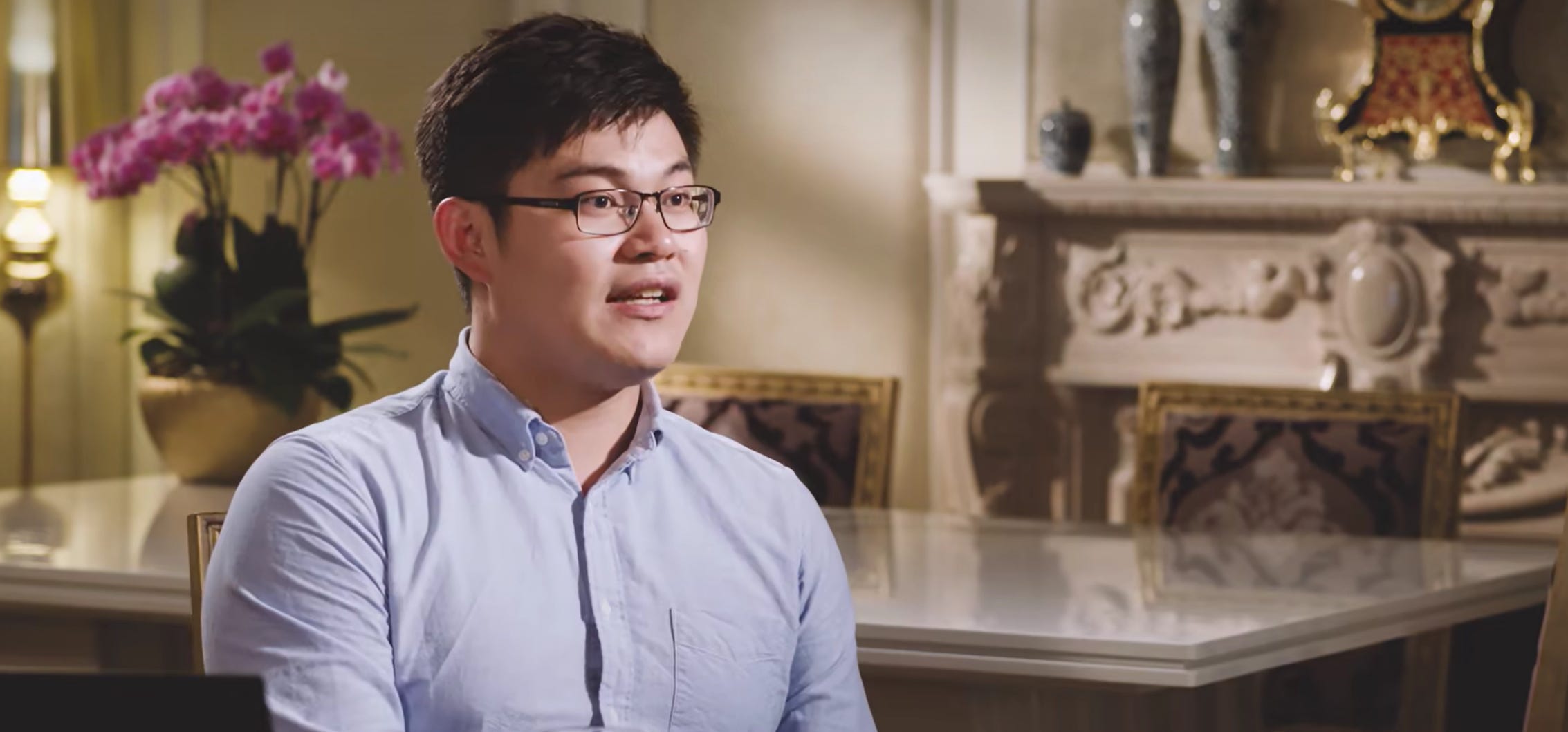
Name: Mao Keji (毛克疾)
Born: 1991 (age: 34)
Position: Research Analyst, Strategic Research Department, International Cooperation Centre, National Development and Reform Commission (NDRC)
Other: Founder of the South Asia Research Brief (南亚研究通讯), which has around one million followers across Chinese social media
Research Focus: India’s domestic politics; Sino-Indian relations
Education: BA University of Toronto; MA Tsinghua University–Johns Hopkins University SAIS dual-master’s programme; PhD Candidate Tsinghua University
Experience abroad: University of Toronto; Johns Hopkins University SAIS; Harvard University

FAVOURITE CHILD TO ABANDONED PAWN: THE SHIFT IN TRUMP’S INDIA POLICY DURING HIS SECOND TERM
Mao Keji (毛克疾)
Published in Beijing Cultural Review, December 2025 edition
Thank you to the Beijing Cultural Review and Mao Keji for allowing us to share this article.
Translated by Jan Brughmans
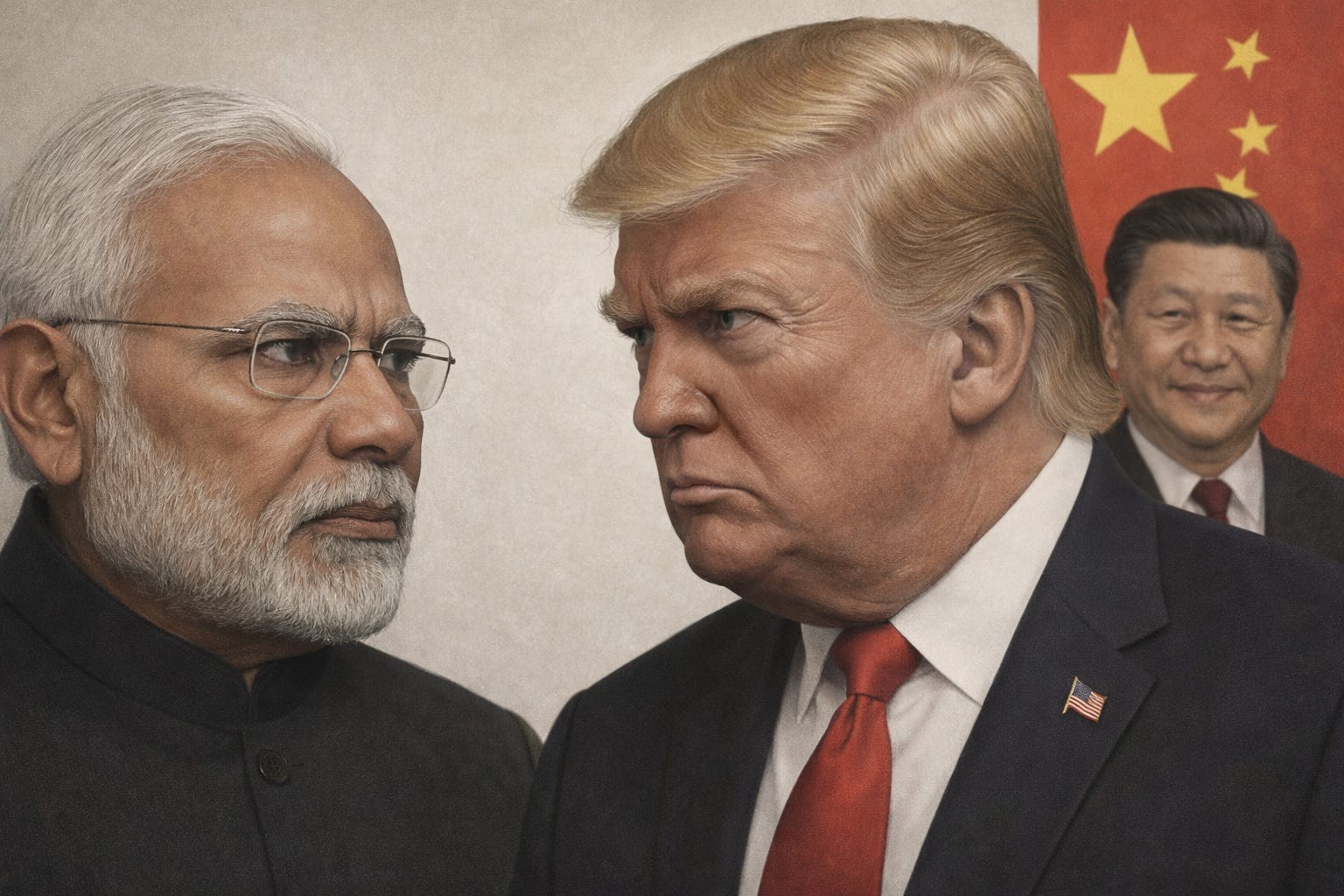
(Illustration by OpenAI’s DALL·E 3)
From Darling to Discarded
Over the past two decades, India and the United States have been widely regarded as natural strategic partners [天然战略伙伴]. Geostrategically, both have identified China as a common competitor, while India—seen as a “high-potential asset” [“潜力股”]—has benefited from comprehensive American support across defence and security, trade and the economy, and science and technology, becoming a clear strategic favourite [战略宠儿]. Yet with the advent of Trump’s second term, US–India relations have taken a sharp downturn.
India has emerged as one of the countries most severely affected in practice by Trump’s tariff war, while also facing repeated policy provocations [政策挑衅] and dismissive rhetoric [言辞轻慢] from Washington, effectively relegating it to the status of a strategic discard [战略弃子]. This abrupt shift in US policy towards India has attracted widespread attention. Some attribute it to Trump’s personal temperament and governing style; others to the Modi government’s inadequate handling of the Trump administration; still others argue that the real cause lies in the Trump administration’s missteps and vacillation [进退失据] in its China policy. While these explanations each capture certain facets of the trajectory of US–India relations, none can simultaneously account for the broader commonalities in Trump’s recent alliance policy [盟伴政策] and the particular abruptness of the deterioration in US–India ties.
This article argues that the Trump administration’s “concern over the decline of America’s power” [对美国自身实力衰落的担忧], rather than its “concern over external geopolitical threats” [对外部地缘威胁的担忧], constitutes the fundamental cause of the sharp transformation in US–India relations. First, it is precisely this anxiety over decline that has led the Trump administration to adopt a more cautious posture towards traditional geopolitical rivals such as China and Russia: beyond rhetorical intimidation [言辞恐吓], Washington has often acted with notable restraint [较为克制], wary of being drawn into a new round of geopolitical confrontation that would deplete scarce strategic resources and thereby accelerate America’s own decline. Second, as the Trump administration’s willingness to confront traditional geopolitical adversaries has markedly diminished, US expectations of its allies and partners—including the European Union, India, and Japan—have shifted accordingly. They are no longer viewed primarily as “pieces on the chessboard for encircling America’s enemies” [为美国围堵敌人的棋子], but increasingly as “blood bags to relieve pressure and prolong America’s survival” [为美国纾困续命的血包]. As a result, the starting point of US alliance policy [盟伴政策] has turned decisively towards the question of how much direct and immediate benefit partners can deliver to the United States. Third, although India has long benefited from American support offered largely “without demanding returns” [不问回报], it lacks the industrial and economic foundations that enable Japan, South Korea, and Europe to make material concessions and signal loyalty to Washington. Nor is India willing to fall fully into line behind the United States [唯美国马首是瞻] as they have done. Instead, it has vacillated [首鼠两端] on issues such as sanctions on Russia and the BRICS framework, prompting the Trump administration to regard India as a target requiring forceful pressure and disciplinary coercion [强力敲打施压].
The shift in the Trump administration’s strategic focus [战略焦点转移] not only helps to explain the common patterns [共性] evident in its alliance policy, but also accounts for the distinctive features of its changing policy towards India. Driven by concerns over its own decline, the United States is no longer willing to commit additional resources to supporting India—particularly a still rapidly rising India. As the gap in national power [实力] between the two countries continues to narrow, Washington has in fact grown more wary of, and resistant to, India. India’s self-congratulatory discourse [自夸式宣传] regarding its own strength and status, its service-sector-dominated economic structure that closely resembles that of the United States, and the high visibility of the Indian diaspora in Western societies have all, objectively speaking, intensified American perceptions of India as an overall threat [整体威胁认知]. As a result, India has become a focal target of Western right-wing populist movements. The provocative actions and disparaging rhetoric directed at India by Trump himself and figures close to him reflect a broader and increasingly negative perception of India within American—and indeed wider Western—society. Viewed from this perspective, so long as the United States remains preoccupied with anxiety over its declining relative position in the global order, it will sooner or later be compelled to reckon with competition from India, not least because a future “battle for second place” [“亚军之争”] between the two countries—over comprehensive national power and aggregate economic size—cannot be ruled out.
Looking ahead, America’s relative decline alongside India’s rise—and a dominant China—might even allow Beijing’s structural tensions with Washington and New Delhi to mutually unwind, triggering a fundamental geopolitical realignment in China’s favour.
II. When Support Came without Conditions: America’s “Strategic Altruism” towards India
Since the late 1990s, the U.S. has placed great expectations [寄予厚望] on India, viewing it as a future superpower on account of its vast population, pivotal geostrategic location, and favourable development trajectory; by virtually every measure, India appeared destined for great-power status [超级大国]. More importantly, as the world’s most populous democracy, India was seen—both ideologically and geostrategically—as fully qualified to rank among America’s key partners, capable of counterbalancing “authoritarian challengers” [威权主义挑战者]. On the basis of these expectations, successive US administrations since George W. Bush’s first term have converged on a broadly consistent approach to engaging India. Former US ambassador to India Robert D. Blackwill and former National Security Council official Ashley J. Tellis encapsulated this approach as “strategic altruism” [战略利他主义], which for more than two decades has served as the overarching guiding principle anchoring US policy towards India.
US “strategic altruism” [战略利他主义] towards India rested on a core assumption [核心假设]: that India’s rise—economically, militarily, and diplomatically—would in all respects serve American interests. A stronger and more prosperous India would not only meet the profit expectations [盈利预期] of US capital, but would also, by virtue of its growing weight in Asia, crowd out, balance, and constrain [挤压、平衡、牵制] a rapidly rising China, thereby becoming a democratic lock [民主枷锁] checking an “authoritarian China” [“威权中国”]. This assumption was further extrapolated to suggest that the long-term strategic dividends generated by India’s rise would necessarily outweigh the short-term costs borne by the United States. On this logic, even if India did not deliver immediate returns, Washington should continue to invest in, support, and tolerate [容忍] India over time. America’s generosity [慷慨], however, was by no means a matter of pure benevolence or charity; it was a conscious course of action grounded in strategic calculation. When considering support for India, US leaders did not ask, “What can India do for the United States?” but rather, “What can India do for itself?” So long as India continued to advance towards economic prosperity and military strength, it would reinforce a “balance of power favourable to freedom” [有利于自由的实力均衡]—a consideration that became ever more salient as China’s influence expanded. Accordingly, US foreign-policy decision-makers judged long-term strategic convergence between the United States and India to be paramount, while short- to medium-term frictions were of secondary importance. As long as India sustained its own momentum of development, Washington saw ample reason to tolerate New Delhi’s self-assertive [自以为是] and unilateralist behaviour [自行其是] on issues ranging from trade barriers and climate negotiation to multilateral affairs at international organizations.
Guided by this line of thinking, since the 1990s the United States—under both Democratic and Republican administrations—has spared no effort in supporting India, even at considerable cost [不遗余力], and has on occasion gone so far as to resolve major difficulties on India’s behalf. For example, the George W. Bush administration took the lead as early as 2001 in lifting the international sanctions imposed on India following its 1998 nuclear tests. It then proceeded, at the risk of widespread international criticism, to push through the US–India Civil Nuclear Agreement [美印核协议], lobbying the Nuclear Suppliers Group (NSG) [核供应国集团] to grant India a special exemption [特批豁免]. As a result, India became a rare exception within the international arms-control regime: despite not being a signatory to the Nuclear Non-Proliferation Treaty (NPT) [核不扩散条约], it was permitted to retain military nuclear capabilities while freely importing nuclear fuel and technology. Similarly, the Obama administration not only publicly endorsed India’s bid for a permanent seat on the United Nations Security Council (UNSC) in 2010, but in 2016 also designated India a Major Defense Partner (MDP). This status enabled India to enjoy near “alliance-level” [“盟国级”] treatment in US arms sales and technology transfers—covering almost the full spectrum of advanced mainstream systems—without entering into a formal military alliance with the United States. India has also benefited from Washington’s application of “double standards” [双重标准] in the realm of secondary sanctions. Although US domestic law mandates secondary sanctions for significant transactions involving Russia or Iran, Washington not only exempted India’s participation in the development of Iran’s Chabahar Port, but the US Congress later passed specific legislation allowing India to deploy Russian-made S-400 air defence systems without triggering US secondary sanctions. By contrast, Turkey—despite facing comparable circumstances—was denied such an exemption.
It is worth noting that, as the United States has come under mounting pressure in the geopolitical arena, the Biden administration—seeking to counterbalance China more effectively—has moved to bind [绑定] India more closely to Washington across industry, technology, science, and defence. For example, the Biden administration’s Initiative on Critical and Emerging Technologies (iCET) [“关键与新兴技术倡议”] relaxed export controls and restrictions on technology transfer to India, granting it a form of “internal access” [内部访问权] to cutting-edge fields such as artificial intelligence, semiconductors, and nuclear energy. Similarly, the Indo-Pacific Economic Framework (IPEF) [“印太经济框架”] launched by the Biden administration in 2021 [Note: sic — in fact launched in May 2022]—particularly its pillars on “fair and resilient trade” [公平和有弹性的贸易] and “supply-chain resilience” [供应链弹性]—has helped India substitute for Chinese manufacturing capacity through “friend-shoring” [友岸外包]. Senior figures within the Biden administration, including the so-called “Indo-Pacific czar” [“印太沙皇”] Kurt Campbell and National Security Advisor Jake Sullivan, have even argued—after leaving office—for the establishment of a new type of US–India alliance. They have proposed anchoring this relationship on “five pillars” [五大支柱] drawn from areas of pronounced US advantage, namely frontier technologies, industrial economics, military and defence, intelligence and information, and global coordination. In this vision, the aim is to provide more systematic support for India: replacing iCET with the Technology for Resilient, Innovative, and Secure Trust (TRUST) initiative [“利用战略性技术重塑关系倡议”] to promote India’s frontier technological development; advancing joint arms production and research through the India–US Defense Acceleration Ecosystem (INDUS-X) [“印美国防加速生态系统”]; and fostering India’s industrial upgrading through bilateral supply-chain and investment agreements.
Although the foregoing examples represent only selected episodes from the recent intensification of US–India engagement, they are nonetheless highly representative. In order to exempt India, the United States was willing to compromise established practices in international nuclear non-proliferation governance, even at the expense of its own international authority [国际威望]. It accepted the stigma [骂名] of “double standards” and extended to India forms of preferential treatment beyond the reach of most other countries. It was likewise prepared to commit its own industrial and technological advantages to fostering India’s development. All this demonstrates that America’s long-standing pursuit of “strategic altruism” [战略利他主义] towards India was substantive rather than rhetorical—an approach grounded in concrete policy choices rather than self-serving posturing [非自我标榜]. Yet this pattern of preferential treatment [特殊优待], long enjoyed by India and increasingly taken for granted [视为理所当然], came to an abrupt end when Trump entered the White House for his second term.
III. The Sudden Reversal of US–India Relations in Trump’s Second Term
If previous US presidents had never paused to ask “what India has done for the United States”, Trump in his second term not only posed this question explicitly, but did so with a megaphone—at maximum volume, in the harshest tone [最严厉的口吻], and in the crudest language [最粗鲁的用词], repeating it again and again. Since 2025, the Trump administration has not only pressured India to purchase more American arms and energy, but has also imposed a 25 per cent “reciprocal tariff” [“对等关税”] on Indian goods, along with an additional 25 per cent secondary sanction linked to Russia. At the same time, it has sharply increased visa fees for Indian nationals in the United States and tightened restrictions on service outsourcing to India. Within a very short span of time, India was transformed from a courted beneficiary [拉拢对象] of American exceptional favour [特殊优待] into a target of maximum pressure [极限施压] and coercive disciplining [敲打]. This abrupt downturn in US–India relations has deeply unsettled India’s strategic elite as well as a segment of the American foreign-policy community, with some even warning that “the efforts made by the United States over the past two decades to improve India–US relations have been squandered by Trump’s India policy”.
First, India has been among the countries hit hardest by Trump’s global tariff war. As one of the earliest foreign leaders to visit Washington during Trump’s second term, Prime Minister Modi entered his February 2025 meeting with Trump hoping to resolve outstanding trade disputes; both sides did indeed pledge to “raise bilateral trade to USD 500 billion by 2030”. Even after the Trump administration unveiled its “reciprocal tariffs” [“对等关税”] in early April, senior Indian officials continued to boast that this represented a “once in a generation opportunity” for India, expressing confidence that Indian exports to the United States would face lower tariffs than those of most other countries, thereby allowing India to capitalise on supply-chain relocation and expand its exports. However, owing to India’s hard-line stance on issues such as agricultural tariffs and failure by Washington and New Delhi to reach any agreement before the end of July, Indian exports to the United States were subjected to a 25 per cent tariff, not only higher than those imposed on South Asian neighbours such as Bangladesh and Sri Lanka, but also above the levels applied to Southeast Asian countries including Vietnam and Cambodia. India’s much-touted “tariff advantage” [“关税优势”] thus evaporated [化为泡影]. Moreover, citing India’s continued “purchases of Russian oil”, the Trump administration imposed an additional 25 per cent secondary tariff on Indian goods, pushing the total tariff burden on Indian exports to the United States to as high as 50 per cent—significantly higher than that faced by China. This directly punctured India’s grand narrative [宏大叙事] as a preferred destination for industrial and supply-chain relocation [产业链供应链转移目的地]. If Indian exports to the United States are subject to higher tariffs than Chinese goods, the very premise on which India seeks to attract global investment risks rapid collapse.
Second, India’s service sector, the mainstay of its economy, has been subjected to highly targeted pressure [精准敲打]. India has long run a structural deficit in merchandise trade and relies heavily on service exports and overseas remittances [侨汇] to maintain balance-of-payments stability and ensure overall macroeconomic steadiness. In mid-September, the Trump administration signed an executive order proposing to raise the fee for the H-1B visa to USD 100,000 for foreign skilled workers. Although the policy made no explicit reference to India, given that Indian nationals account for as much as 71 per cent of successful H-1B applicants, the measure would substantially raise the barriers for Indians seeking to work in the United States and sharply curtail India’s incremental remittance income. Given that India is the world’s largest recipient of remittances—and that the Indian diaspora in the United States constitutes a core source—the revised H-1B policy would not only strain US–India relations, but could also pose risks to India’s macroeconomic stability. Subsequently, the US Congress introduced the Halting International Relocation of Employment Act (HIRE Act) [阻止国际就业迁移法案], which proposes a 25 per cent consumption tax on payments made by US firms to overseas service providers, with the explicit aim of preventing the offshoring of American service-sector jobs. Industry analysts estimate that US outsourcing contracts account for 50–60 per cent of the revenues of Indian IT firms and Global Capability Centres (GCCs) [全球能力中心], meaning that, if enacted, the legislation could deal a direct blow to India’s USD 260 billion technology sector. Should these policy measures take effect in combination, the impact on India’s service exports could be severe [严重冲击]. On the one hand, the new H-1B rules would block a key channel through which Indians working in the United States generate remittance income; on the other, the outsourcing restrictions would simultaneously choke off opportunities for Indian firms to secure service contracts at home.
Third, India has been subjected to an unprecedented intensity of verbal provocation [语言挑衅] from figures within Trump’s inner circle. Trump himself has repeatedly targeted [三番五次瞄准] India by seizing on issues ranging from India–Pakistan relations and macroeconomic performance to the Ukraine crisis. Shortly after an India–Pakistan aerial clash, Trump announced plans to develop Pakistan’s oil resources, mockingly suggesting that “Pakistan might one day even sell oil to India”. Around the same time, he declared that the Indian economy was “dead”, adding that there was “no business to be done with India” because Indian tariffs were “the highest in the world”. In August, Trump further attacked India for purchasing large volumes of Russian oil and reselling it on the open market for substantial profits, accusing India of “not caring whether Ukrainians live or die”. At the same time, Trump’s close associates—including presidential adviser Peter Navarro, Treasury Secretary Scott Bessent, and Commerce Secretary Howard Lutnick—joined what might be described as a contest of ever-harsher rhetoric [“打印锦标赛”]. Navarro not only labelled the Ukraine crisis “Modi’s war”, but went so far as to describe India as “a laundromat for the Kremlin”. Bessent argued that while both China and India purchase Russian oil, India’s profiteering was more reprehensible than China’s. Lutnick, for his part, bluntly characterised India as “a country that needs fixing”. Attacks from Trump’s political base—the “Make America Great Again” (MAGA) movement—have been even more unrestrained. For instance, the right-wing internet personality Charlie Kirk, who was later assassinated, claimed that Indian immigrants were “crowding out American workers”, arguing therefore that “America does not need more Indians to get visas”. Trump-favoured right-wing activist Laura Loomer went further still, branding Indian immigrants “Third World invaders” [“第三世界入侵者”].
An analysis of the abrupt downturn in US–India relations reveals several salient features [特点]. First, the shift has been exceptionally abrupt: India has moved from being a long-standing “darling” [宠儿] enjoying American exceptional favour [例外优待] to a “discarded” actor [弃子], now subjected to highly targeted pressure by the Trump administration. Second, the scope of impact has been extensive. India has not only come under pressure on tariffs, but has also faced maximum coercion [极限施压] in areas such as immigration and service outsourcing. Third, American rhetoric has been overtly provocative and insulting [极具挑衅和侮辱意味]. The U.S. has shown little regard for India’s self-image [自我期许] as a major global power, repeatedly choosing to “call out and humiliate” [“拆穿打脸”] India over issues it has sought carefully to gloss over [苦心粉饰]—such as the India–Pakistan ceasefire, Indian military aircraft losses, and imports of Russian oil—while simultaneously applying even harsher pressure on India through secondary sanctions.
IV. Current Explanations for the Sudden Reversal in US–India Ties
The sharp volatility in US–India relations has attracted intense attention from global policy and academic communities, which have advanced a range of explanations that are, on the surface, highly persuasive [颇具说服力]. The most common line of interpretation attributes the downturn to Trump’s personal temperament and behaviour [性格和行为]. For example, the Indian scholar Narendra Taneja argues that “this is less a problem between the United States and India than one between Trump and India”. Similarly, former U.S. National Security Advisor John Bolton has suggested that the sharp decline in U.S.–India relations is merely “one of the many eccentricities of the Trump presidency”, asserting that “when Trump leaves office, he will take this episode of history with him”. Along comparable lines, scholars such as Tanvi Madan contend that Trump was deeply dissatisfied with India’s handling of the India–Pakistan ceasefire, believing that his own mediation efforts had not received sufficient recognition from New Delhi, while Pakistan, by contrast, praised him effusively and even nominated him for the Nobel Peace Prize.
A second, and equally mainstream, line of explanation locates the deterioration in India’s own policy choices. For instance, Milan Vaishnav argues that India should respond to America’s “strategic altruism” [战略利他主义] by accommodating a Trump who is perpetually eager to gain the upper hand—making concessions [让步], delivering tangible outcomes [成果], and keeping demands to a minimum [少提要求]. He further maintains that, in order to secure future security and prosperity, it is India rather than the United States that must temporarily bear the pain of sacrifice [牺牲的痛苦]. Similarly, Ashley J. Tellis contends that India has long relied on the U.S. while simultaneously indulging the illusion that it has already become one pole in a multipolar world. Unless India dispels this misconception about its own power, he warns, it will inevitably damage U.S.–India relations and suffer the consequences. In the same vein, Sidharth Raimedhi argues that India’s long-standing tendency to “seek benefits without paying costs” [“只求好处,不想付出”] can be sustained in the short term, but is inherently unsustainable over time [必然难以为继].
A further explanation points to India’s exposure of its own limits in national power [自身实力不足]. One of the key assumptions underpinning America’s long-standing bet on India’s rise has been the expectation that India would, over time, be capable of balancing China [制衡中国]. Yet, as Sidharth Raimedhi notes, China has in recent years continued to widen its lead [领先优势] over India, prompting growing doubts about whether India can realistically catch up. If the U.S. no longer expects India to play this balancing role, it is only natural that US attitudes towards India would cool accordingly [冷眼相看]. Ashley J. Tellis likewise argues that the India–Pakistan air clashes of May 2025 demonstrated that India was unable even to secure overwhelming superiority over Pakistan—let alone confront China single-handedly [独立对抗中国]. In his assessment, even by 2047, the centenary of India’s independence, India would still require external assistance [外部帮助] to counterbalance China. Chietigj Bajpaee further observes that while the Trump administration targeted India on the grounds of its trade surplus with the United States and its purchases of Russian oil, it did not apply comparable pressure to other surplus countries such as China, Japan, and South Korea, nor to major buyers of Russian oil such as China and Turkey. This selective treatment, he argues, underscores India’s limited bargaining power [议价能力] and retaliatory capacity [反击实力], making it a comparatively easier target for coercion.
In addition, some analysts locate the fundamental cause [根本原因] of the shift in U.S.–India relations in changes in U.S. policy towards China. Ashley J. Tellis argues that the United States previously treated great-power competition [大国竞争] with China as the central axis of its foreign policy [外交政策轴心], a framing that conferred exceptional priority [优先地位] on India. In Trump’s second term, however, competition with China is no longer understood primarily as a traditional geopolitical rivalry [传统意义上的地缘政治竞争], but rather as an economic contest—one in which the entire world is increasingly viewed as an economic competitor of the United States. Milan Vaishnav similarly observes that Trump’s second-term China policy has been neither clear [不清晰] nor coherent [不连贯]. While a bipartisan consensus in the United States has long held that India constitutes a key bulwark [堡垒] against China in the Asia-Pacific, any weakening of that consensus would inevitably diminish India’s importance [重要性].
It can be said that these explanations each shed light, to varying degrees, on certain aspects of the current state of U.S.–India relations, yet they also suffer from clear shortcomings [缺漏]. On the one hand, they fail to account for the commonalities [共性] between Trump’s policy towards India and his approach to other allies, even though his hard-line posture has by no means been directed at India alone. On the other hand, they do not adequately explain the distinctive intensity [突出剧烈性], breadth [广泛性], and provocativeness [挑衅性] of Trump’s policy towards India in particular.
V. The Trump Administration’s Strategic Shift from “Geopolitical Competition” to “National Survival”
The core reason for the abrupt deterioration in U.S.–India relations lies in the fact that the Trump administration’s “concern over the decline of America’s power” [对美国自身实力衰落的担忧] has come to outweigh its “concern over external geopolitical threats” [对外部地缘威胁的担忧].
First, the Trump administration has been deeply preoccupied [高度关切] with concerns over America’s own relative decline, displaying a far more pronounced inward-looking tendency [内顾倾向] and adopting extreme caution [极为谨慎] towards traditional forms of geopolitical competition, lest the depletion of strategic resources [消耗战略资源] accelerate that very decline. Indian scholars have lamented that, while the Trump administration imposed secondary sanctions on India on the grounds of “transactions involving Russia” [涉俄交易], it simultaneously extended tacit overtures [暗送秋波] towards Russia itself; while levying heavy tariffs on India as a geo-economic partner, it treated China—nominally a strategic rival [作为对手的中国]—with relative restraint [点到为止]. This pattern of behaviour reflects a shift in threat perception [威胁认知的转变]. The core narrative underpinning the MAGA movement that supports Trump is that America’s global position is in grave peril and that the country must urgently focus on “national survival” [救亡图存], while guarding against the overextension [过度扩张] of geopolitical commitments that could further drain national power [透支国力]. As a result, Trump has acted with greater prudence, even to the extent of stepping outside conventional friend–foe dichotomies [传统敌我逻辑] to conduct what amounts to a “strategic audit” [战略审计] of costs and benefits. From this perspective, the Trump administration’s comparatively conciliatory posture towards China and Russia stems from the recognition that both possess not only the capability but also the will [意志] to retaliate against the United States. Aggressive containment [强硬围堵] would therefore risk entangling the U.S. in new rounds of geopolitical confrontation, hastening America’s own decline. Seen in this light, China and Russia have been redefined—from threats demanding active countering to actors with whom the United States must learn to coexist, and even, potentially, collaborators in forms of geopolitical collusions [地缘战略勾兑的共谋].
Second, the Trump administration’s expectations of its allies and partners have shifted from seeing them as “pieces on the chessboard for encircling enemies” [协助围堵敌人的棋子] to viewing them as “blood bags to sustain America’s survival” [为自身续命的血包]. A scholar who previously served as an Indian diplomat has revealed that, in the past, discussions with American counterparts frequently centred on how India contributed to competition with China. Under Trump, however, the response has become: “Don’t tell me what you have done to deal with China—tell me what you have done for the United States.” At the core of this shift lies a fundamental transformation in America’s expectations of its allies. For decades, it had expected partners to play a supportive role [发挥协助作用]—benefiting from U.S. backing while coordinating to contain and counter adversaries such as China, Russia, and North Korea. Once the Trump administration’s primary concern [首要关切] became the decline of America’s own power, however, allies were redefined as instruments for relieving pressure and prolonging U.S. strength—“blood bags” [血包]. Viewed through this lens, the strategic importance of institutions such as NATO and the Quadrilateral Security Dialogue (Quad) has declined sharply. The U.S. no longer expects—nor feels it needs—its allies to participate in geopolitical confrontation [地缘战略对抗]. Instead, it prefers to bypass [绕过] multilateral frameworks in favour of bilateral pressure, pushing partners to purchase more of their energy and weaponry and to commit large-scale outbound investments. Compared with geopolitical competition—where the costs are believed to be borne by the United States while the returns remain uncertain—extracting tangible concessions from allies promises quicker, clearer, and more immediate benefits for Washington.
Third, although India has long benefited from American support grounded in “strategic altruism” [战略利他主义], it lacks the material capacity [实力] and economic foundations [家底] that Japan, South Korea, and Europe possess to offer concessions and signal deference [让利输诚] to the United States. Nor has it been willing to bow as fully [俯首称臣] to Washington as they have done. Instead, India has vacillated on issues such as sanctions on Russia and participation in the BRICS framework—behaviour that has become increasingly intolerable [难以忍受] in the eyes of a Trump administration adept at conducting “strategic audits” [战略审计]. To be sure, for a long period the United States was willing to pursue towards India a form of strategic altruism that “did not demand short-term returns and focused only on long-term value”. Yet this approach rested on an implicit premise [隐含前提]: a high degree of confidence in America’s own strength and its substantial lead over India. Washington was assured that supporting India would not undermine US power, nor would India, as a result, pose any meaningful threat [产生威胁] to the United States. Once that confidence began to erode—especially as anxieties over relative decline took hold—this policy of concessions towards India not only became unsustainable, but also triggered a strong “compensatory psychology” [补偿心理]. The U.S. increasingly adopted the mindset of a “creditor” [债主], seeking to reclaim benefits previously extended and privileges once granted. From the Trump administration’s perspective, for example, India’s ability to purchase Russian oil was not the result of diplomatic finesse [外交技巧高超], but merely a consequence of special exemptions granted by the United States. If the Modi government failed to cooperate, Washington would not only be fully justified [完全有理由] in revoking those exemptions, but would also compel India to pay a price for the privileges it had previously enjoyed. Likewise, although India has long received American support, it has proved more reluctant [更不愿意] than Japan, South Korea, or Europe to make concessions on issues central to U.S. interests—such as tariffs, energy, and arms purchases. It has even refused to accord Trump what he considers due recognition for his role in the India–Pakistan ceasefire, while enthusiastically participating in multilateral mechanisms such as the Shanghai Cooperation Organisation (SCO) and BRICS which Washington sees as inimical to its interests [冲击美国利益]. In this light, India appears conspicuously ungrateful [极其忘恩负义]. Given the Trump administration’s long-standing narrative that the United States has been exploited by its allies, forced to shoulder excessive burdens while receiving inadequate returns in exchange, India’s perceived behaviour—taking more than it gives, lacking gratitude, overestimating its own standing, and even causing disruption [还捣乱]—has made it a prime target for repeated pressure, and even humiliation, by Trump himself and those around him.
In addition, there may be a more complex dimension to U.S.–India relations. A closer examination of the rhetoric of far-right American opinion leaders such as Charlie Kirk and Laura Loomer suggests that segments of U.S. society have developed a strong sense of threat vis-à-vis India’s rise, particularly resentment towards what is perceived as “India’s rise at America’s expense” [以美国为代价]. Some have even framed this grievance in blunt terms, claiming that “high-end Indians come to Silicon Valley to take American jobs, while low-end Indians stay in India to take American jobs”. As Sino–U.S. strategic rivalry enters a phase of stalemate [相持期], and as India’s position in the global political economy continues to rise, frictions between the United States and India are likely to intensify further. First, once the United States begins to worry about its own relative standing [自身地位], India’s self-aggrandising narratives not only fail to enhance its “united front value” [统战价值], but instead invite greater American pressure and extraction [压榨和敲打]. Second, against the backdrop of the U.S. economy’s long-term shift from the real economy towards financialization and digitalisation [脱实向虚], India’s official push to expand Global Capability Centres (GCCs) [全球能力中心] and to promote the outward mobility of technical talent has objectively eroded the foundations of America’s service sector, even generating head-to-head, structurally similar competition. Third, amid the resurgence of anti-immigration sentiment across Western societies, the relatively high levels of achievement and visibility of the Indian diaspora have paradoxically made it more vulnerable as a scapegoat for populist discontent, thereby imposing greater diplomatic pressure [外交压力] and strategic apprehension [战略疑惧] on India as a country of origin. Seen in this light, the current round of pressure and provocation directed at India by Trump himself and figures close to him—particularly restrictions related to H-1B visas and service outsourcing [服务外包]—is likely to reflect the growing prevalence of negative sentiment towards India within American society.
VI. Conclusion
At present, many experts and scholars attribute the abrupt deterioration in US–India relations during Trump’s second term to Trump’s personal temperament, India’s unilateral policy missteps, or ambiguity in US policy towards China. On this basis, they tend to regard the current situation as a temporary aberration [暂时的异常状态], and to expect that a more moderate [温和] and rational [理性] U.S. administration in the “post-Trump era” will be able to steer U.S.–India relations back onto the “normal track” [“常规轨道”] that characterised the past two decades. Their inclination to reach such conclusions stems largely from intellectual inertia [思维惯性]: an unwillingness to question America’s power and status makes it difficult for them to recognise that the decisive factor reshaping Trump’s foreign-policy orientation is precisely “concern over the decline of America’s own power” [担忧美国自身实力衰落]. While a recovery in U.S.–India relations in the future cannot be ruled out, scholars must look beyond surface phenomena to grasp the underlying dynamics [本质], and ask whether the structural factors [结构性因素] driving the current volatility in U.S.–India relations are likely to intensify or to weaken over time.
Should the United States’ relative political and economic power continue to erode globally, American decision-makers and society are likely to become increasingly preoccupied with preserving their position, generating sharper threat perceptions [威胁认知] of a still rapidly rising India whose industrial structure closely resembles their own. Under this scenario, if China consolidates a position of overriding strength [超越性的实力地位] through advances in defence capabilities and industrial and technological power—particularly by securing a clear and decisive advantage in comparison with the United States—this would, in objective terms, further intensify U.S.–India same-rank competition [同位竞争]. It could accelerate a prospective “battle for second place” [“亚军之争”] between the United States and India over global rankings in comprehensive national power and aggregate economic size, and might even create conditions in which the two sets of structural contradictions—between China and the United States, and between China and India—achieve some form of a “self-resolution of dual dilemmas” [两难自解], thereby driving a systemic shift in the broader geopolitical landscape.
READ MORE
Mao Keji on China’s Rise, Nationalism and Western Misconceptions (Part 1)

Mao Keji (毛克疾) is a rising star among China’s new generation of India watchers. He has worked for several years as an analyst at China’s influential National Development and Reform Commission (NDRC) and is currently on leave as a visiting PhD Candidate at Harvard University. Mao is also a prolific commentator on international affairs and the founder of the popular South Asia Research Brief (南亚研究通讯), which tracks and analyses developments in South Asia and now has around one million followers across Chinese social media.