



Recently released official data show that China’s population decline accelerated in 2025, with the lowest birth rate since national records began in 1949.
China is not the only country facing a demographic cliff-edge, but as with many aspects of China’s political economy, the scale and speed of the shift are remarkable. This edition’s author, Zhang Junni (张俊妮), notes that China’s total fertility rate fell from 1.3 to 1.01 in just three years, whereas South Korea took 17 years to drop from 1.3 to around 1.0.
China’s controversial legacy of family planning made this a politically fraught conversation for many years, but in 2021 Beijing formalised the turn from birth restriction to encouragement through the three-child policy.
A sign of how far the conversation has moved into the open is Xi Jinping’s Qiushi article on the topic, published in November 2024. Still, the official framing remains notably non-alarmist, treating population decline as a new normal to be managed—with downsides, but also potential upsides. Cai Fang (蔡昉), in a March 2023 speech summarised by Sinification, typifies this mainstream, technocratic approach.
Zhang is notably more concerned, treating demography as a strategic constraint on China’s innovation capacity, economic output, and even its international “discursive power” (话语权), and arguing that the window for gradualism is closing.
Other prominent voices in China’s pronatalist debate, such as Huang Wenzheng (黄文政) and Liang Jianzhang (梁建章), also sit on the more alarmist side. In a separate article, they argue that the long-run national impact of ultra-low fertility “far exceeds that of war and economic crisis”. They also advocate a radical package of fiscal incentives, arguing that spending might need to rise as high as 10%—or even 20%—of GDP.
Zhang’s speech, however, is especially interesting because it largely sidelines the popular idea of fiscal incentives. It belongs to the more “socio-cultural levers” camp in the demography debate, focusing on disincentives rooted in China’s high-pressure education system. In doing so, she borrows the term “involution” (内卷), which readers will recognise from debates on overcapacity, to describe wasteful, zero-sum competition in China’s education and employment system.
Zhang’s speech also stands out for its rare call for China to consider immigration—a topic she herself notes is acutely sensitive.
— Jacob Mardell
Key Points
China’s demographic decline is accelerating. After three consecutive years of population contraction, the total fertility rate has fallen from 1.3 to 1.01 in just three years—a decline that took South Korea 17 years.
On unchanged fertility and mortality rates—excluding migration—China’s population would fall to around 400 million within 83 years, producing a sharply inverted population pyramid.
A shrinking and ageing population will weaken China’s innovation base, undermine long-term macroeconomic stability and erode its international “discursive power” (话语权), including its status as the world’s largest market.
To fix this, economic incentives are insufficient: pronatalist efforts in South Korea have largely failed because they do not address societal barriers such as inflexible employment practices and gender-unequal care responsibilities.
Much of China’s post-2000 generation grew up amidst intense competition and loneliness, negatively influencing their future willingness to marry and build families.
Hence, to give young people the space to build the real-world relationship skills needed for marriage and childrearing, policy should focus on reducing societal involution (内卷) by making education less competitive.
Basic education should offer a less pressurised environment, enabling children to spend more time on deep reflection, collaborative exploration, and even some degree of innovation.
Streaming into academic and vocational schools should be postponed until after the Gaokao, so choices are made later and under less pressure, giving young people time to mature and develop learning and social capabilities.
To make opportunities less scarce for young people, China’s demographic strategy should also include fostering a more favourable business environment and expanding opportunities through the private economy.
Immigration planning should be put on the table despite political sensitivities—Japan’s gradual shift away from a closed, homogeneous society towards greater openness to immigration offers a relevant precedent.
The Author
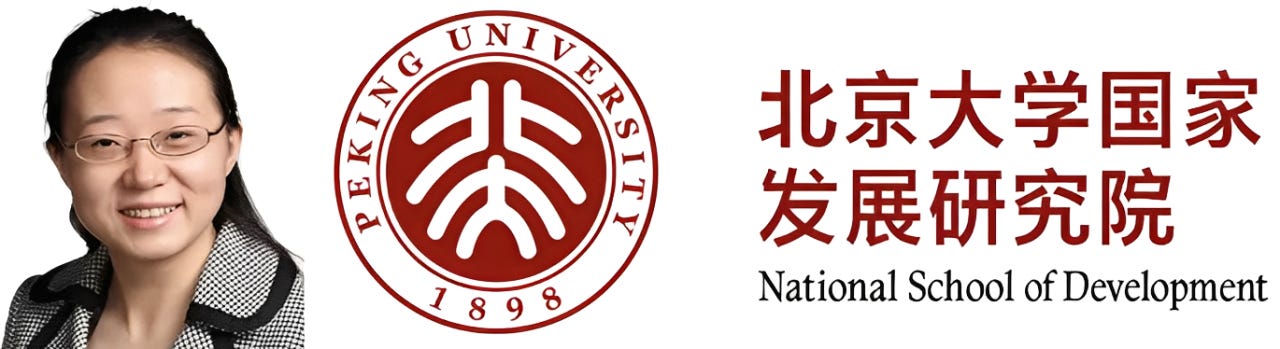
Name: Zhang Junni (张俊妮)
Born: 1978 (age: 47-48)
Position: Associate Professor of Statistics, National School of Development, Peking University
Previously: Assistant Professor of Statistics, Guanghua School of Management, Peking University (2002 to 2006); Associate Professor of Statistics, Guanghua School of Management, Peking University (2006 to 2019)
Other: Entered the University of Science and Technology of China’s Special Class for the Gifted Young in 1993 (aged 15)
Research focus: Bayesian demography; causal inference; data and text mining
Education: BSc (Computer Software), University of Science and Technology of China (1998); PhD (Statistics), Harvard University (2002)
Experience Abroad: Visiting Scholar, University of California, Berkeley (Spring 2025)

ZHANG JUNNI: DEMOGRAPHIC TRENDS AND RELATED POLICY RECOMMENDATIONS
Zhang Junni (张俊妮)
New Economist Think Tank × TAIXUE (November 2025)
Translated by Cherry Yu
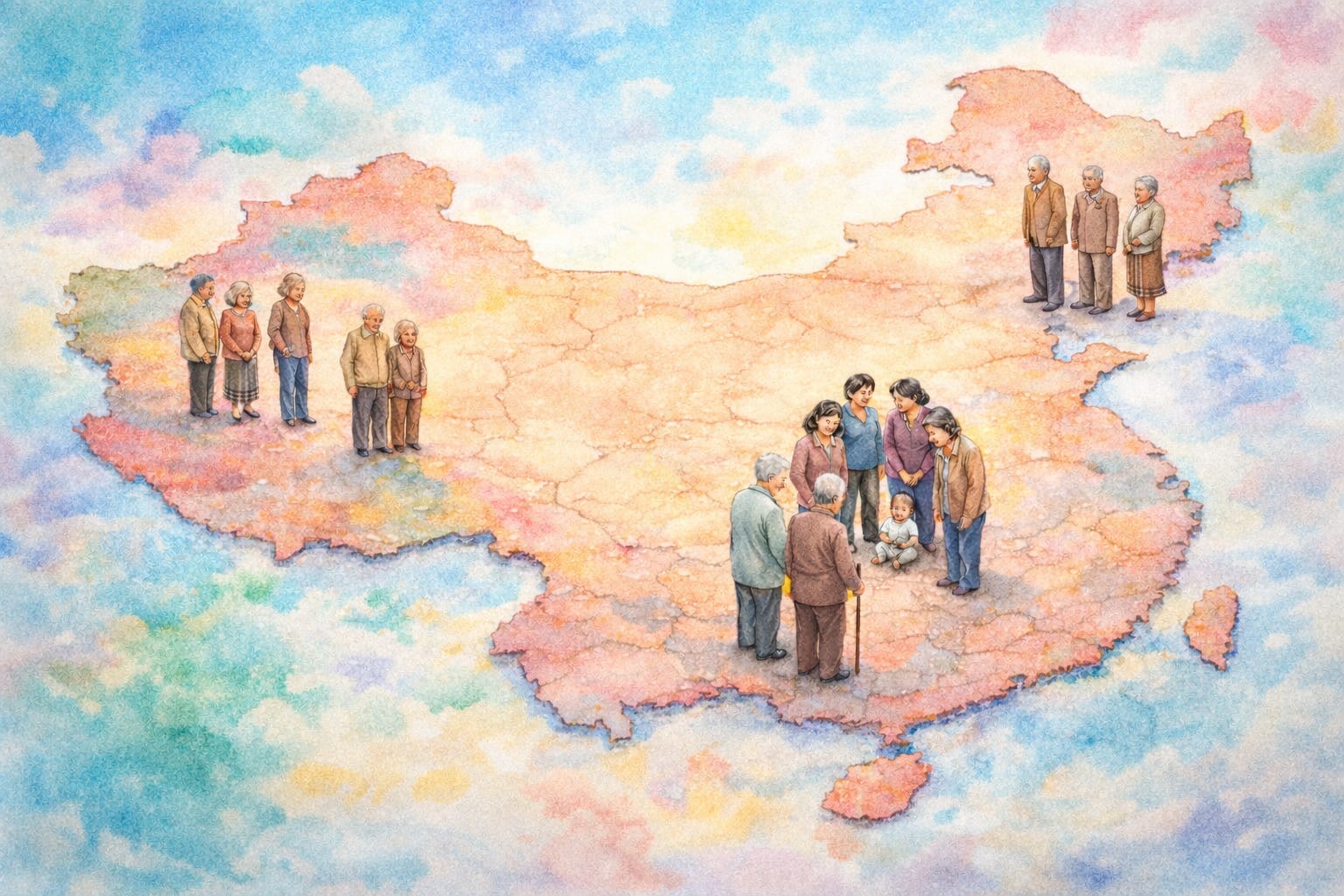
(Illustration by OpenAI’s DALL·E 3)
I. Population to Return to 400 Million in 83 Years
China’s population will return to around 400 million in 100 years, returning to the “four hundred million Chinese compatriots” spoken of a century ago. This was a projection I made four years ago, which faced some scepticism at the time.
Four years have passed and new data have been released. If there is any need to revise that initial prediction, it is that it was overly optimistic. Assuming age-specific fertility and mortality rates remain at their 2023 levels and international migration is not taken into account, then 83 years from now China’s population will have fallen back to about 400 million, with the population structure presenting a sharply inverted-pyramid shape. Children aged 0 to 14 will account for 6.4% and people aged 65 and above will account for 45.7%.
If we compare this with the current global situation: in 2024, among countries with populations exceeding 40 million, South Korea has the lowest share of people aged 0 to 14, at 10.6%, while its population aged 65 and over accounts for around 20%. Japan has the highest share of people aged 65 and over, at 29.6%, and its share of children aged 0 to 4 is 11.4% [Note: International datasets put Japan’s 0 to 4 share far lower. 11.4% roughly corresponds to the 0 to 14 share, suggesting this is a slip.]
In other words, 83 years from now, the proportion of people aged 0 to 14 in our population will be even lower and the proportion of those aged 65 and above will be even higher, which is an extremely serious situation.
At present, our country has already experienced three consecutive years of population decline and the pace of demographic change is particularly rapid. For instance, the number of marriage registrations has declined for nine consecutive years from 2013 to 2022. In 2013 there were 13.469 million registered couples, but by 2022 this number had fallen to 6.835 million couples. By 2023, because of the pandemic, there was a post-pandemic compensatory wave of marriages and the number of marriages rose to 7.682 million couples. However, in 2024 this figure had re-entered a downward trend, falling to only 6.106 million couples.
Let us now look at the total fertility rate, which refers to the average number of children a woman bears over her entire childbearing period, from ages 15 to 49. Internationally, 2.1 is generally regarded as the level required for generational replacement, meaning that only when women have an average of 2.1 children over their reproductive years can the total population size remain stable, given that only women give birth and the risk of death must also be considered.
What is the level in our country? At the time of the Seventh National Population Census in 2023 [sic], our total fertility rate was only 1.3, already at the ultra-low fertility threshold set by the United Nations, a figure which did not yet mark the lowest point. [Note: The Seventh Census was conducted in 2020 and results were released in May 2021.] Three years later, by 2023, our total fertility rate had fallen further to 1.01. At the current pace, this may still be the most favourable figure we will see for many years to come. It is worth noting that in South Korea it took 17 years for the total fertility rate to fall from 1.3 to around 1.0, whereas in our country this process has taken only three years.
In 2024, our total population stood at 1.41 billion, and those aged 65 and above accounted for only 15.6%, so many people may not yet have fully felt the impact of population decline and the onset of an ageing society. This is because from 1962 to the early 1970s we experienced a peak in birth rates and those born during that period have not yet reached 65. Once this cohort enters the 65-and-over group, the degree of population ageing in our country will rise sharply, and when they eventually pass away, the total population will decline accordingly. This is an undeniable demographic law.
II. Demography Is Destiny
Let us now consider the challenges posed by a declining total population and population ageing. Auguste Comte, the French sociologist known as the father of sociology, once remarked that “demography is destiny”, meaning that for a country, its population determines its fate. Over the long term, a shrinking and ageing population is unfavourable to innovation. Sectors such as DeepSeek, AI agents and related fields are currently driven overwhelmingly by young people; if, in future, there are too few of them to “take up the baton” [接棒], where will our dynamism and capacity for innovation come from?
A reduction in total population and population ageing will also inevitably affect and shock the total economic output. On the one hand, the labour force contracts; on the other, aggregate demand declines. At the same time, ageing will drive a sharp increase in expenditure on pensions, medical insurance and care services. Our social security system currently operates on a “pay-as-you-go basis” [现收现付制], so without a sufficiently large labour force and enough young people, it will come under enormous pressure.
More crucially, if a country’s total population is no longer so large and it is in a state of severe ageing, its “discursive power” [话语权] across various spheres will be greatly diminished. For example, although we often say that China is the world’s largest market, in the future it may be difficult to maintain this status, raising the question of what we should do in such a situation. Since a country’s total population is determined only by births, deaths and migration, and life expectancy cannot be increased without limit, if we do not treat large-scale admission of international immigrants as an option, the only step we can take is to raise the fertility rate, which is the only national policy available to us.
III. Boosting the Fertility Rate Is a System-wide Undertaking
International experience shows that raising the fertility rate requires a whole set of coherent and mutually compatible policies across areas such as family and labour, markets, education and health care. These policies must be responsive to the diverse needs of the public and must also remain relatively stable over time.
Let us look at examples from East Asian countries such as South Korea, Japan and Singapore, which have cultures quite similar to ours, also exhibit ultra-low total fertility rates, and have in fact adopted highly proactive measures to encourage childbearing. One example is childcare enrolment: in our country, only 6% of children aged 0 to 2 were enrolled in childcare institutions in 2023, whereas in South Korea the enrolment rate is 24.9% for zero-year-olds, 86.2% for one-year-olds and 92.8% for two-year-olds. Despite this, their gains are still limited, because these countries have not achieved certain fundamental changes, such as addressing a highly competitive education system, long working hours, inflexible employment conditions, gender inequality in family and childcare responsibilities, and the instability of employment contracts, which further exacerbates these difficulties.
In June 2024, the South Korean government declared a demographic state of emergency and announced the launch of a full-scale response mechanism, which is to remain in place until the problem of low birth rates is resolved. Yet resolution is defined only as raising the total fertility rate to 1.0. To this end, the government has identified three core tasks: reconciling work and family life, improving the child-rearing environment and addressing housing problems, while also resolutely advancing structural reforms in areas such as balanced regional development, education and health care.
Previously, South Korea’s Presidential Committee on Ageing Society and Population Policy functioned only in an advisory role, with no authority to design policy or implement budgets. This time, the South Korean government has announced the establishment of a new deputy prime minister-level body, the Ministry of Population Strategy and Planning, tasked with formulating a medium- to long-term national development strategy on population issues, including responses to low fertility and population ageing, as well as the design of immigration policies.
We should take [South Korea’s experience] as a lesson. While our country’s demographic situation is not yet as severe, we should already be elevating population issues to a higher strategic level. I will now put forward several specific policy recommendations.
IV. Changing the Highly Competitive Educational Environment
My first recommendation is to change the highly competitive educational environment and place strong emphasis on encouraging cooperation in education. This matters because the factors that affect demography, including forming families and raising children, are all behaviours that require tolerance and cooperation. Today’s children grow up in an environment of intense “involution” [内卷], and they rarely have the opportunity or the time to play freely, to cooperate with, or to learn to build long-term, affectionate relationships with their peers. Quite a number of middle and high school students have already clearly stated that they do not want to marry or have children in the future, and as they enter adulthood, they are likely to face even greater difficulty in successfully forming families and raising children.
The post-2000s generation has grown up in loneliness, even though they have been raised in collective settings, in reality they face many things on their own in the absence of an environment that fosters cooperation. Today some gaming companies and AI chat providers design customised characters specifically for these lonely post-2000s youth, catering to their emotional needs and providing personalised emotional value, but this is merely a form of virtual emotional support and cannot help young people successfully form families, have children and raise them in real life. In reality, people differ from one another in many ways, and forming a family and raising children requires greater compromise, tolerance and cooperation, which in turn take time and opportunity to accumulate and cultivate.
V. Postponing General and Vocational Streaming Until After the Gaokao
Here I should touch on the policy of “general and vocational streaming” [普职分流], now referred to as the “coordinated development of general and vocational education” [普职协调发展]. Ideally, some children, those with strong practical skills and a preference for vocational education, might be suited for vocational high schools, while others who are more inclined to engage with theoretical questions might be better placed in general high schools. In both cases, the aim is to help children find a development path according to their own interests and characteristics. However, in reality, if a child receives a low score on the high school entrance exam [中考], they are often directed toward vocational high schools. This creates a perception that general and vocational streaming is essentially a form of hierarchical stratification, thereby fostering an intensely anxious atmosphere.
Compared to the general high school system, our vocational high school system is less well-developed and much of the vocational curriculum does not yet align with society’s future needs. Under these circumstances, when some children are effectively forced into vocational education, they and their families come under immense pressure. This pressure can provoke anxiety even among primary school pupils and drive involution from kindergarten onwards, turning education into a “utilitarian zero-sum game” [功利性的零和游戏].
Even though we have already implemented the “Double Reduction” policy, the actual curriculum content is becoming ever more extensive and challenging. Because parents know their children will later be subject to general and vocational streaming, many feel compelled to personally tutor their children’s homework or enrol them in numerous extracurricular classes. As a result, children are required to “work through large volumes of practice exercises” [刷题], leaving them with little time for deep thinking, socialising or meaningful engagement with their peers.
Fundamentally, basic education should provide a less pressurised environment, enabling children receiving basic education to have more time for deep reflection, collaborative exploration and even some degree of innovation. Yet the inertia of intensive practice-exercise work and involution formed at this stage often carries over into university. In theory, the university phase should be when students engage with more advanced knowledge while also considering their future paths. In reality, however, many remain trapped in an involuted mode of behaviour, taking numerous courses, accumulating large numbers of credits, constantly chasing higher grades and striving for all-round excellence.
Furthermore, some students have already exhausted so much mental energy during middle and high schools that, once they enter university and are free from parental supervision, they simply want to “lie flat” [躺平]. Others, having become accustomed to intensive practice-exercise work, remain fixated on whether they can improve themselves by doing more practice problems, often without developing the awareness needed to construct their own knowledge frameworks from the subjects they study. Yet truly mastering advanced knowledge and transforming it into creativity or productive capacity depends not on exam-oriented techniques, but on the ability to synthesise knowledge, think independently, and collaborate meaningfully. All of these capacities take time to cultivate and accumulate and rely on appropriate guidance and a supportive foundation laid during basic education.
From another perspective, a child’s brain only reaches a relatively mature stage at around age 15. Yet our current general and vocational streaming policy is implemented at the stage of the high school entrance examination. This means many children have to face this choice precisely at 15, and are required to determine their future educational and career paths just as their cognitive capacities are still developing and before they have gained much real-world experience.
Therefore, I find it difficult to discern any sound rationale for implementing general and vocational streaming at the stage of the high school entrance examination. By comparison, our general high school education system is relatively mature and much more developed than the vocational education system, and our country’s online-education technologies are also highly advanced. If China so wished, it could bring high school education fully within the scope of compulsory education and shift the point of general and vocational streaming to after the “national college entrance examination” [高考]. By that stage, young people would be more mature, more capable and qualified to make life choices about their own future. As the level of knowledge required for future work continues to rise, quality vocational education in fact should be built upon the foundation established during secondary education.
VI. Creating a Diverse Environment and Reducing Involution
My second recommendation is to create an environment that fosters diverse forms of development and cooperation, and to reduce involution. Educational reform alone is not sufficient, because if future pathways and opportunities remain scarce, parents will still invest considerable money and time in their children. Under these circumstances, raising children becomes a burdensome task; it is hard enough raising one child and considerably harder with two. As previously mentioned, a woman needs to have an average of 2.1 children over her reproductive years to maintain a stable total population, yet if most families can only manage to raise one child at most, this goal is hardly attainable. Therefore, we need to build an environment that enables diverse development and cooperation for children. In terms of opportunities, we should foster a favourable business environment and promote the growth and strengthening of the private economy. In this way, more opportunities will be created, so that even those who are made redundant can find new employment relatively quickly.
South Korea provides a telling example. As the country with the world’s lowest total fertility rate, the South Korean government has adopted all kinds of measures, some of which even seem rather unconventional, to encourage childbirth. Yet involution remains intense, and the fertility rate still has not risen. South Korea has also carried out roughly 60 years of educational reform, attempting to reduce involution through various means, but without success. A key reason is that the most desirable opportunities are largely concentrated within large conglomerates and the civil service, and from a young age everyone competes fiercely for these limited pathways. This is why creating an environment that supports diverse development and expands opportunities is so important.
VII. Planning Ahead for Immigration
My third recommendation is to formulate forward-looking plans for immigration, a highly sensitive subject that nevertheless demands strategic forethought. The ongoing “talent wars” [抢人大战] among provinces and cities already reflect development anxieties at the local level; at the national level, therefore, [immigration] should not be ruled out as a possible move. Japan’s society is even more ethnically homogeneous than ours and was once almost entirely closed to immigration. Yet, faced with population ageing and low birth rates, it too has been compelled to gradually increase its intake of foreign immigrants.
In recent years, Japan has, in effect, already become a major destination for immigrants. In 2024, the Japanese government launched a new plan to increase the total number of foreign workers with specific skills to 800,000 over the next five years. China can certainly take this as a reference. Beyond attracting high-level talent, we could also consider specific sectors, such as the domestic service sector. While our per capita income is far lower than Hong Kong’s, the price of domestic services here is higher and the quality lower, largely because Hong Kong employs Filipino domestic workers. If our country wishes to consider large-scale immigration in the future, it would be advisable to prioritise countries with closer ethnic and cultural affinities, in order to mitigate potential social tensions. This topic is relatively sensitive and involves many layers of consideration, so I will not elaborate here. I hope our country can respond in a timely manner to the challenges of low fertility and population ageing and promote high-quality demographic development.
READ MORE
Xu Jilin on Sexuality, Boredom and Political Apathy Among China’s Youth (Part 1)

Xu Jilin (许纪霖) is one of China’s most prominent historians and public intellectuals (in the non-pejorative sense), renowned for his work on modern Chinese intellectuals, thought and culture. A longtime professor at East China Normal University in Shanghai, he has been a leading figure in efforts to...
It is an interesting self-made "problem", and being self-made it would seem the solution is also within reach if the will to act is there.
What do people need to see before having more kids? Time and Money. China has very unequal pay, horrific working hours culture that penalizes home life, sex and age discrimination *out in the open*. ALL of this could theoretically be fixed by the stroke of the legislative pen.
So do it.
China is already compensating for demographic decline with synthetic capacity.
The problem is not labor, it’s coordination and diversity.
Immigration isn’t about numbers; it’s about preventing epistemic closure.